Key Engineering & Procurement Takeaways
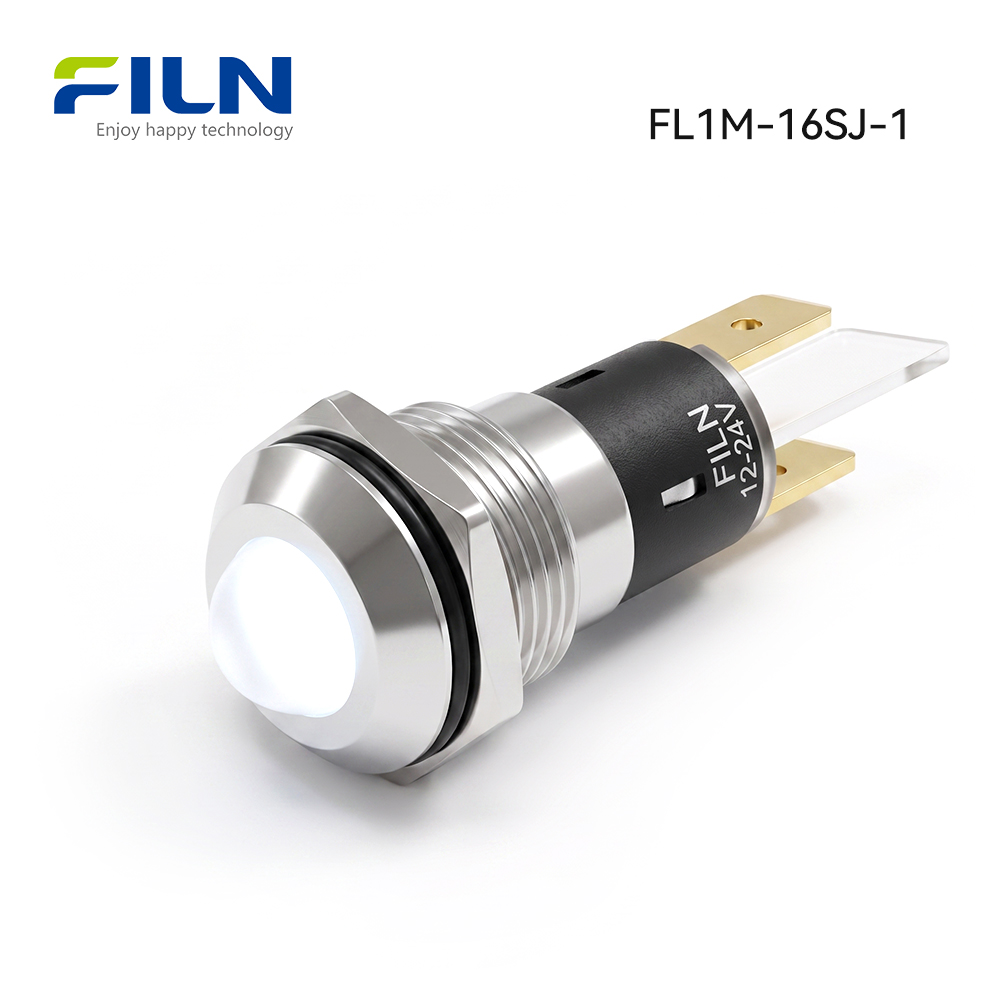
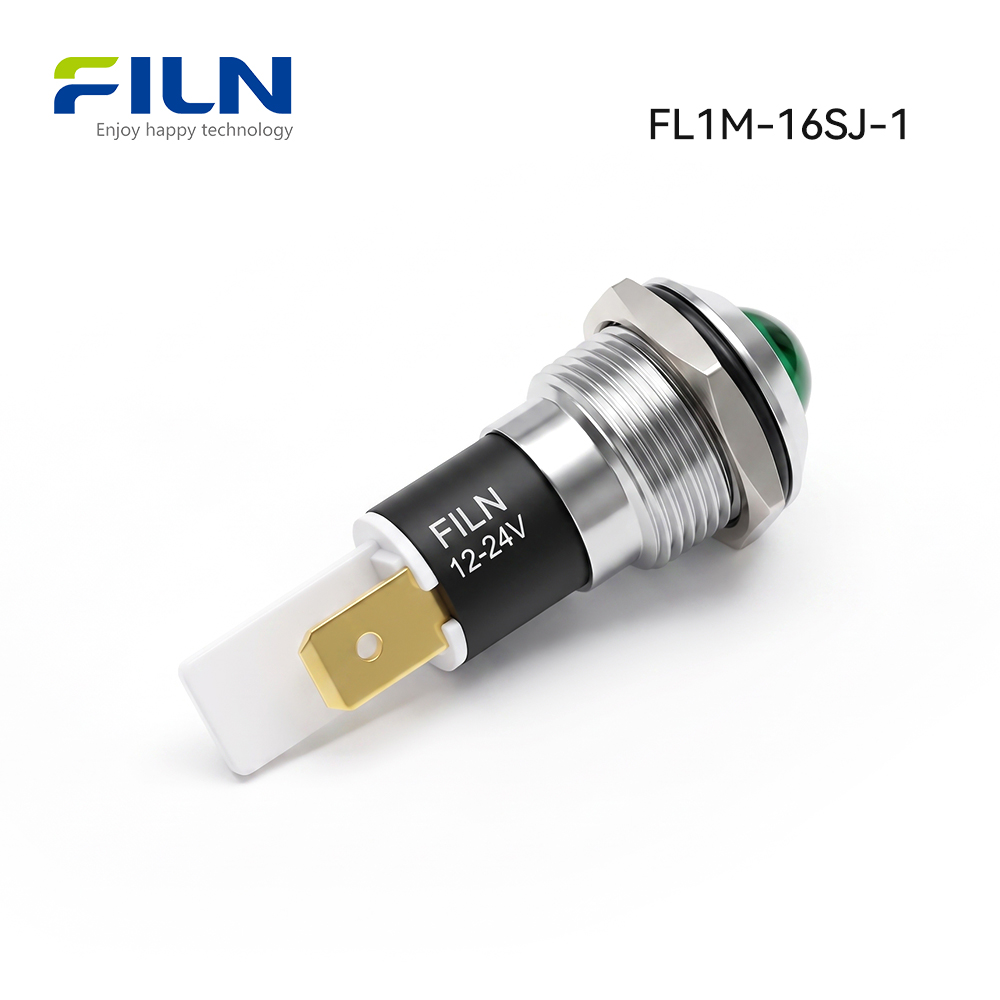
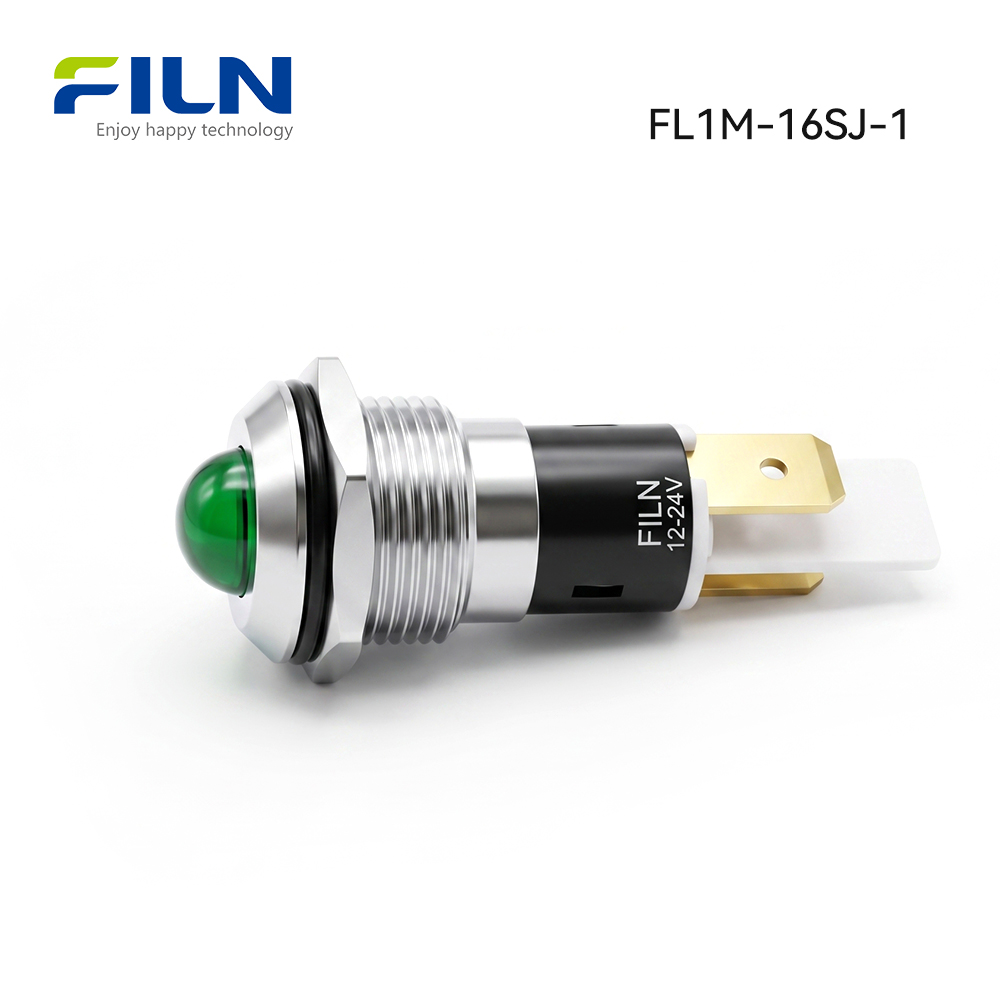
- Product Identity: The FL1M-16SJ-1 is a 16mm convex head metal led indicator lights 12v engineered for professional industrial control panels.
- Voltage Flexibility: Supports custom operating voltages ranging from 3V to 480V AC/DC to match diverse electrical architectures.
- Robust Construction: Built with a copper alloy or zinc-aluminum alloy shell providing superior mechanical strength compared to plastic alternatives.
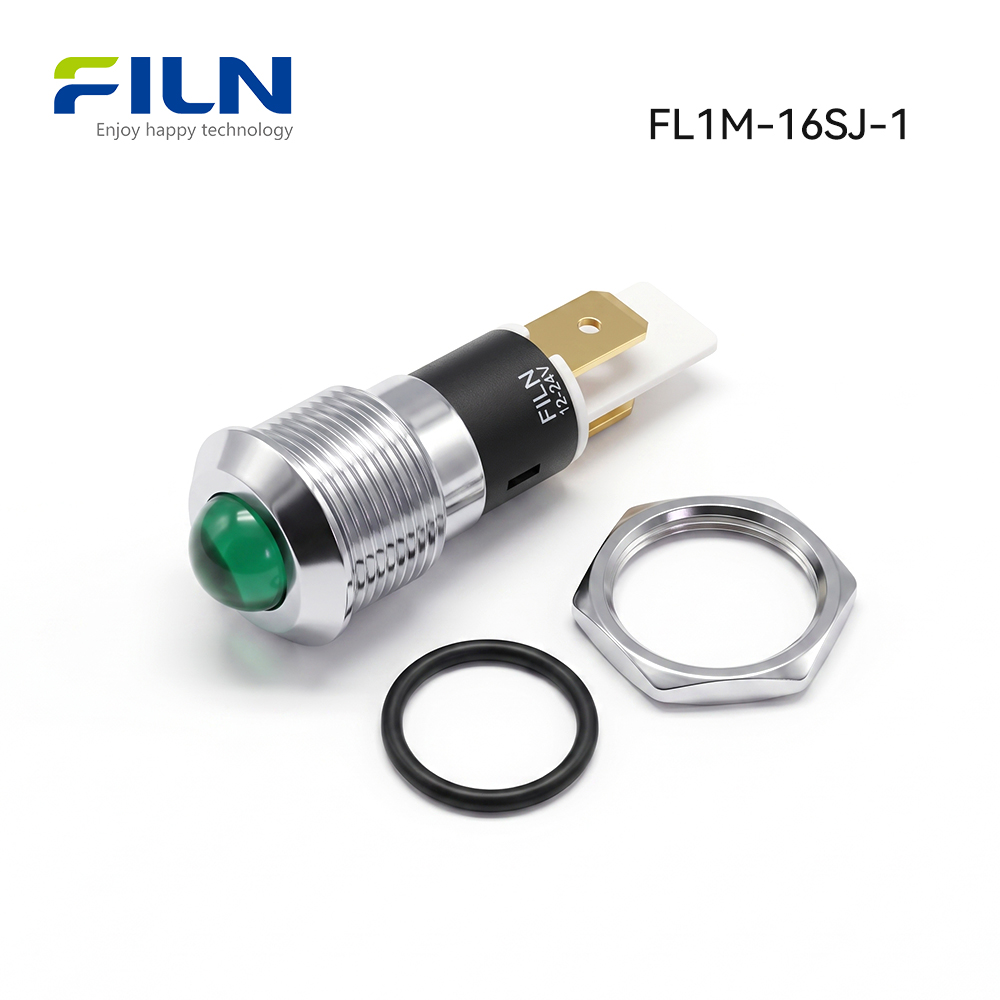
- Protection Rating: Features IP67 waterproof and dustproof sealing when installed correctly with the included silicone O-ring.
- Mounting Specification: Designed for standard 16mm panel cutouts utilizing a single-nut thread mounting mechanism.
- Electrical Termination: Equipped with secure 2pin pin terminals for stable solder or quick-disconnect wiring connections.
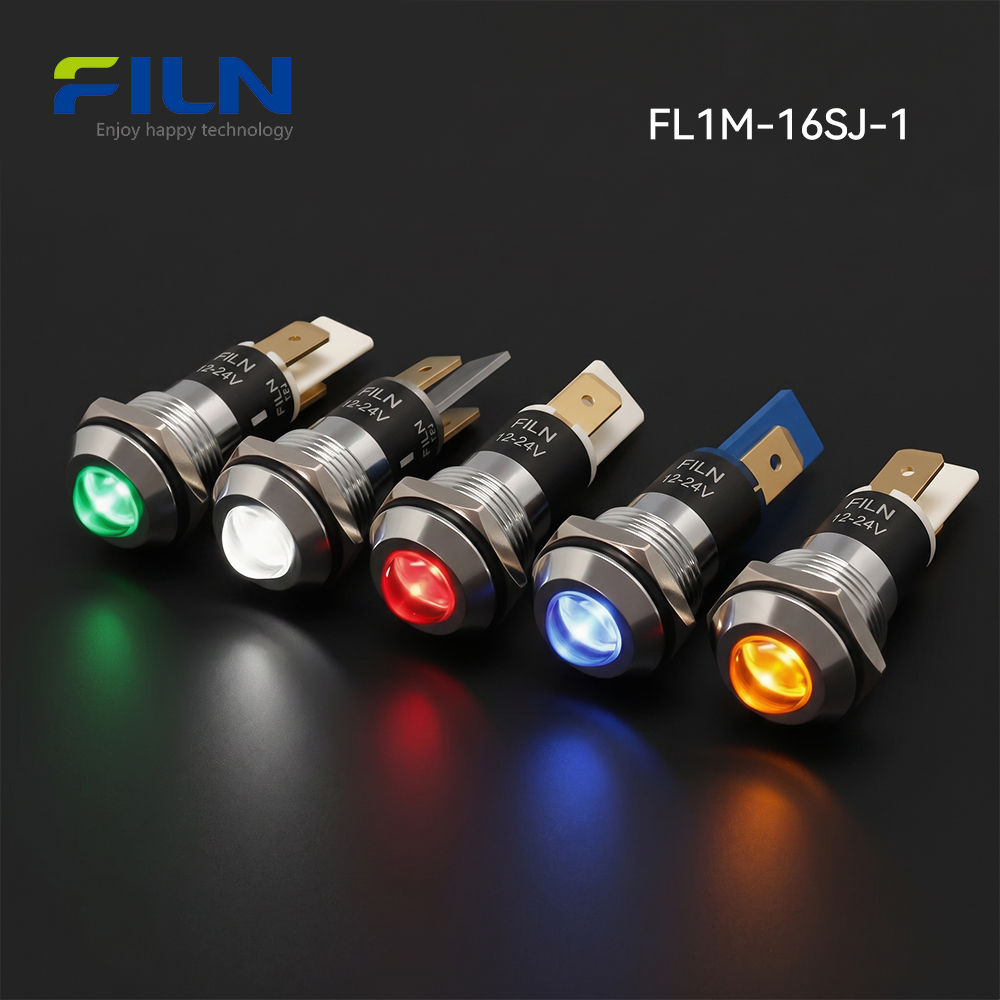
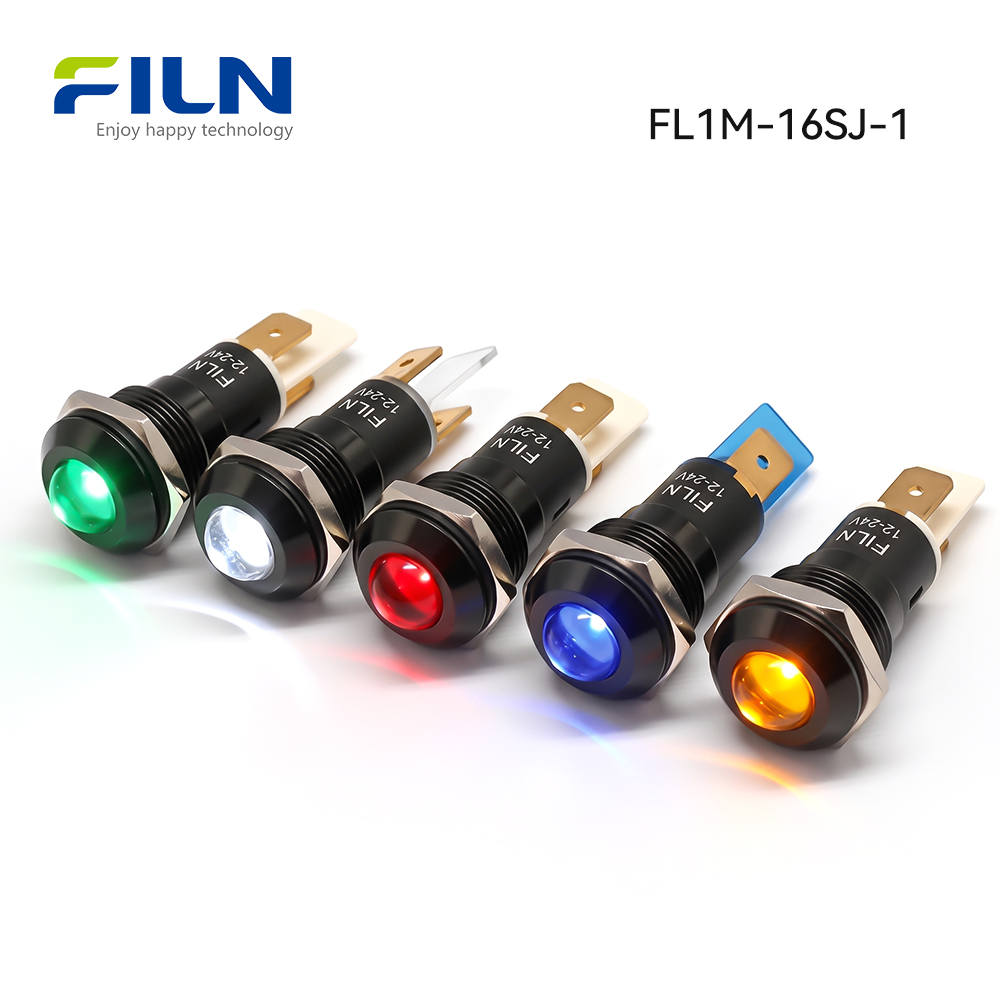
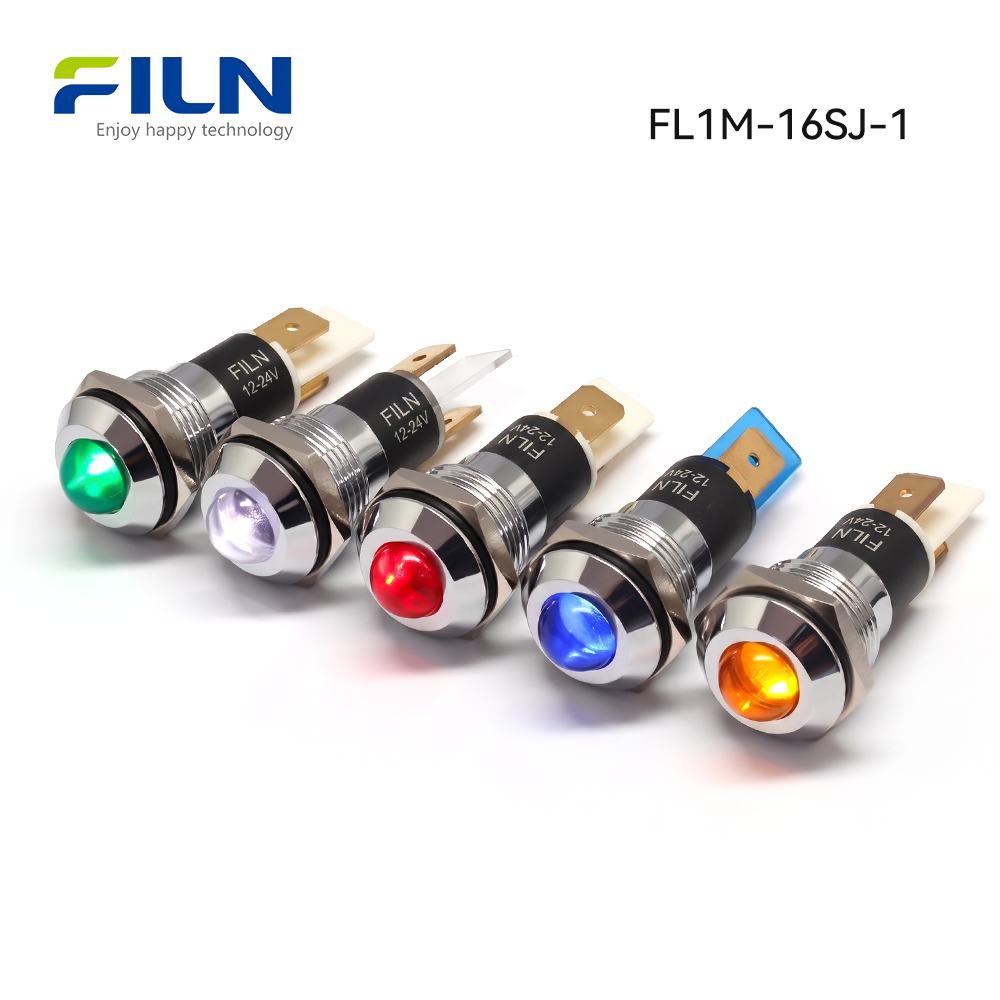
- Optical Performance: Utilizes high-brightness LED components available in Red, Green, Yellow, Blue, and White configurations.
- Global Compliance: Backed by rigorous international safety standards including UL certification (E498776), CE, VDE, and RoHS.
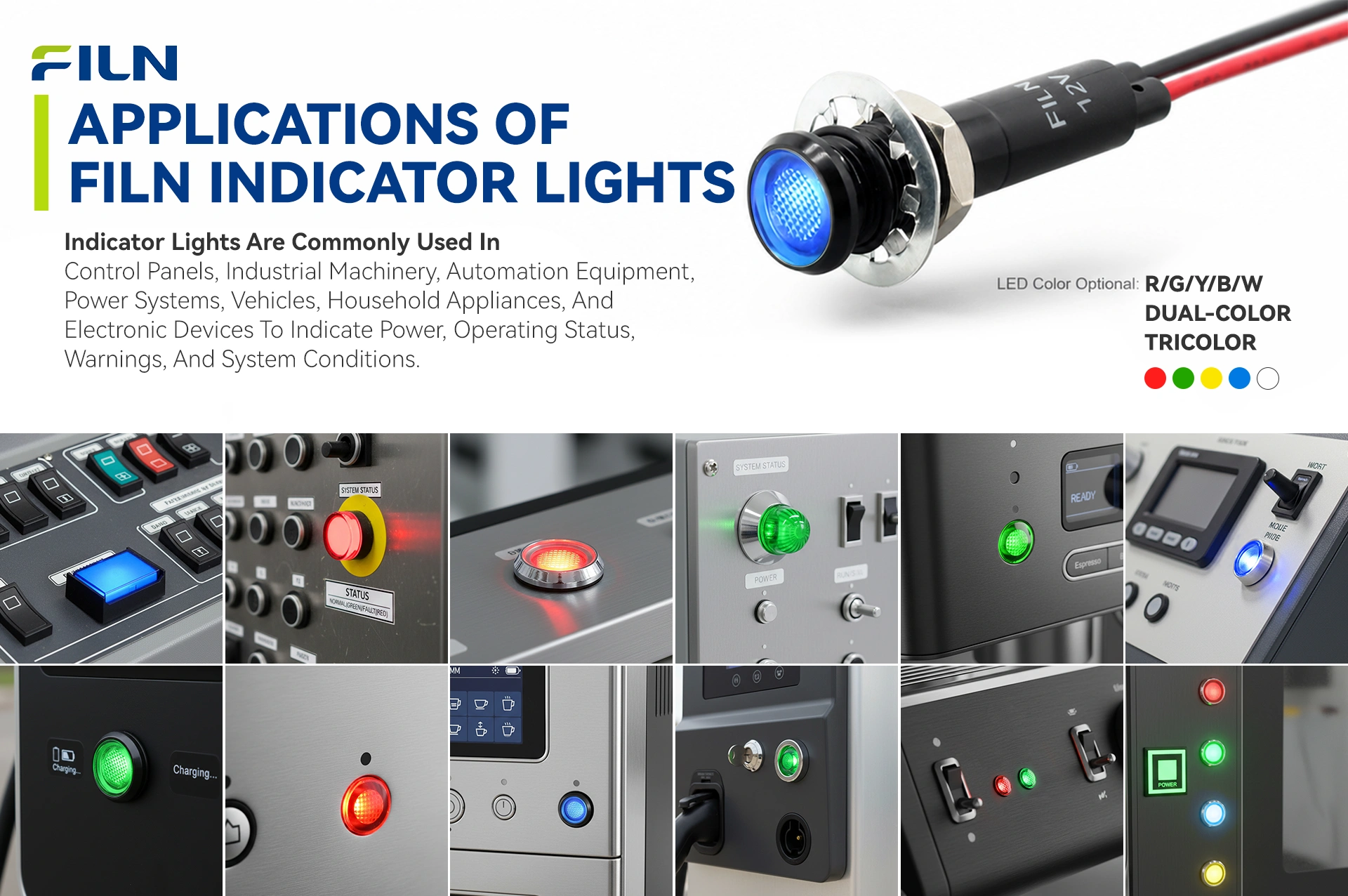
- Application Versatility: Ideal for CNC machine tools, power distribution cabinets, charging piles, and industrial automation equipment.
- Manufacturer Direct Support: Backed by FILN engineering expertise offering custom wire lengths, voltages, and OEM labeling support.
What is the 16mm Metal Indicator Light
An industrial signal device provides visual feedback regarding the operational status of electrical circuits, machinery, and control systems. The 16mm led indicator lights 12v represent a high-durability category of panel-mounted components utilized across modern manufacturing and engineering sectors. FILN manufactures comprehensive indicator options, offering both metal and plastic body constructions across standard mounting sizes from 6mm to 30mm. Electrical termination methods include secure pin terminals and direct wire leads to accommodate specific wiring harnesses.
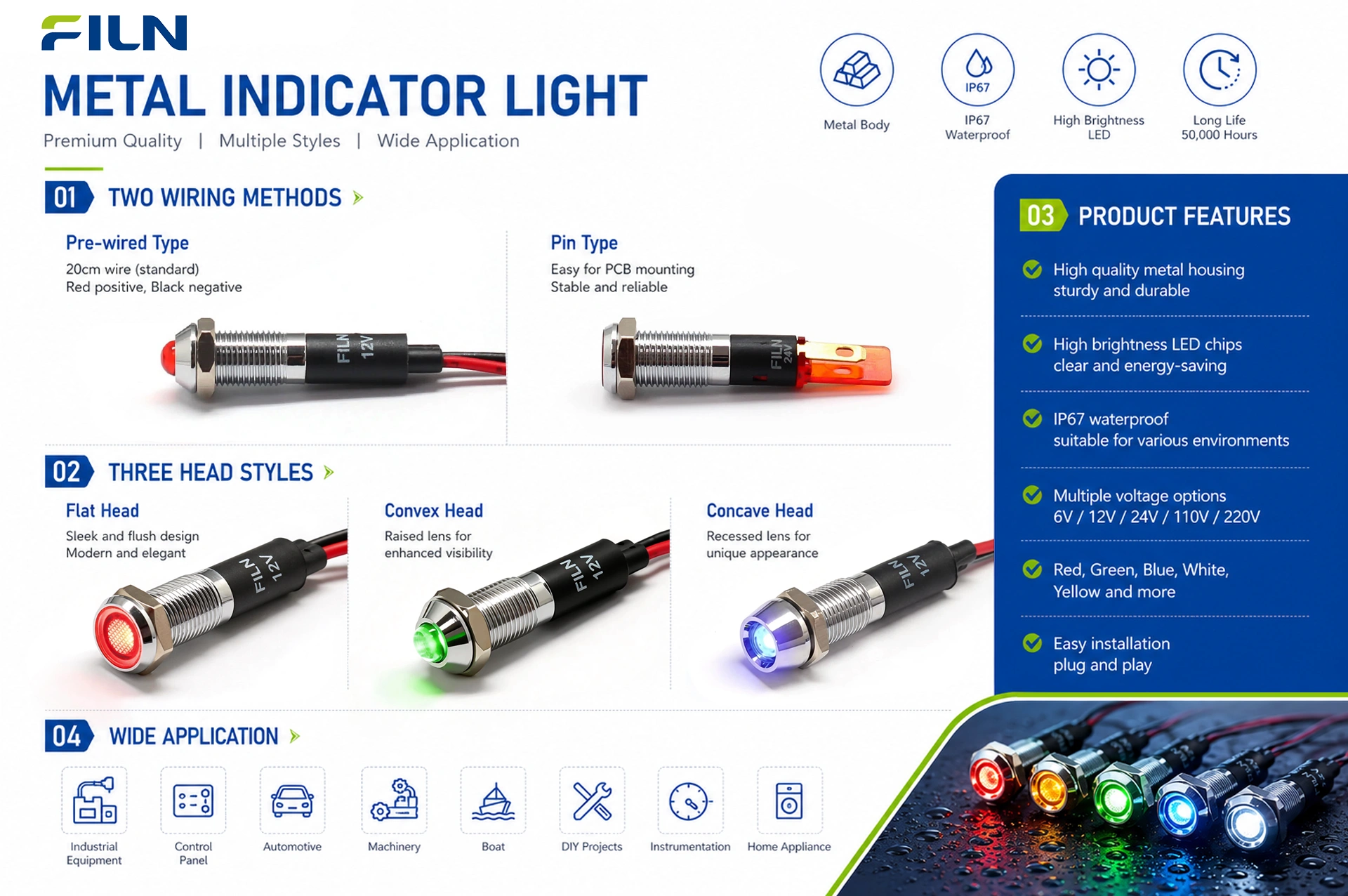
Metal indicator lights feature three distinct head profiles consisting of flat head, convex head, and recessed head variants, allowing engineers to select the optimal aesthetic and operational profile for specific panel layouts. Convex head models project slightly beyond the mounting surface to maximize off-axis viewing angles, ensuring operators can monitor equipment status instantly from multiple vantage points within a control room.
Product Overview & Engineering Principles
The FL1M-16SJ-1 indicator operates by converting electrical energy into visible optical radiation via an integrated semiconductor LED chip paired with a current-limiting resistor. Mechanically, the unit relies on a precision-machined threaded metal housing that clamps securely to control panels using a robust hex nut and silicone sealing ring. Electrically, current flows through the 2pin pin terminals, energizing the internal diode circuit while maintaining galvanic isolation between the hazardous power supply and the operator interface.
Industrial advantages include superior resistance to mechanical shock, vibration, and thermal degradation compared to conventional polymer indicators. The copper alloy body provides effective heat dissipation, protecting internal LED elements from premature failure in high-temperature operating environments. Compliance with global quality benchmarks ensures dependable performance in critical safety circuits, power distribution networks, and automated manufacturing lines.
Quick Technical Specifications
| Product Description |
Metal Indicator Light / led indicator lights 12v |
| Model Number |
FL1M-16SJ-1 |
| Mounting Hole Size |
16mm (0.63 inch) |
| Operating Voltage |
3V – 480V DC/AC (Customizable) |
| LED Color Options |
Red (R) / Green (G) / Yellow (Y) / Blue (B) / White (W) |
| Waterproof Rating |
IP65 / IP67 |
| Wiring Type |
2PIN Pin Terminals |
| Head Type |
Convex Head (Raised Profile) |
| Surface Finish |
Clean, smooth, burr-free, oxidation-free, crack-free plating |
| Assembly Quality |
Head assembly locked securely to base; zero rotation, detachment, skew, or deformation |
Performance Parameters & Electrical Ratings
| Rated Working Voltage |
3V–240V DC/AC (Up to 480V customizable per client specifications) |
| AC Frequency |
50Hz ~ 60Hz |
| Rated Working Current |
≤ 20 mA |
| Rated Power Consumption |
Approximately 0.2W |
| Insulation Resistance |
≥ 100 MΩ (Tested between wire and housing at DC 500V) |
| Dielectric Strength |
1500V ~ 1800V AC, zero breakdown or flashover |
| Operational Working Life |
50,000 to 100,000 hours |
| Ingress Protection Rating |
IP67 Water and Dust Protection |
Component Materials & Engineering Purpose
The selection of engineering materials directly dictates the mechanical integrity, chemical resistance, and operational lifespan of industrial signaling components. FILN constructs each led indicator lights 12v assembly using specialized materials chosen for specific structural and electrical functions.
| Accessory Name (Accessory) |
Material Composition (Material) |
Engineering Function |
| Shell / Housing |
Copper Alloy / Zinc-Aluminum Alloy (Black Plated) |
Provides robust mechanical protection, impact resistance, and electromagnetic shielding. |
| Lamp Holder |
PA66 Polyamide |
Offers high thermal stability and electrical insulation for internal components. |
| Lampshade |
Polycarbonate (PC) |
Ensures high light transmission efficiency, impact resistance, and UV stability. |
| Luminescent Source |
High-Brightness LED Semiconductor |
Delivers energy-efficient optical output with extended working lifespan. |
| Internal Resistor |
Carbon Film Resistance |
Regulates current flow to match specific operating voltage thresholds. |
| Nut |
Copper Alloy |
Ensures firm panel clamping without thread stripping under heavy vibration. |
| O-Ring Seal |
Silica Gel |
Creates an airtight and watertight barrier against moisture and dust ingress (IP67). |
| Plum Blossom Gasket |
Stainless Steel |
Prevents loosening caused by mechanical vibration and thermal expansion cycles. |
Environmental Performance Specifications
This specification defines the general operating boundaries for the metal indicator light series under extreme environmental exposure.
| Part Name |
Metal Indicator Light (FL1M-16SJ-1) |
| Operating & Storage Temperature |
-40℃ ~ +80℃ |
| Operating Relative Humidity |
≤ 85% at +40℃ |
| High Temperature Test |
96 hours at 80±2℃ |
| Low Temperature Test |
96 hours at -40±2℃ |
| Constant Temperature & Humidity Test |
96 hours at 40±2℃, 90% ~ 95% RH |
| Temperature Cycling Test |
Alternating between -40℃ (30 min) and 85℃ (30 min), 5 cycles total |
LED Technical Specifications
1. Absolute Maximum Ratings: Maximum safety limits for the internal LED chip include a peak forward current (IFP) of 20 mA, reverse voltage (VR) of 5 V, power dissipation (PD) of 60 mW, operating temperature range (TOPR) of -40°C to +80°C, storage temperature range (TSTG) of -40°C to +100°C, and lead-free manual soldering temperature (TSOL) not exceeding 260°C for a maximum of 3 seconds.
| Electro-Optical Characteristic |
Test Condition |
Parameter Value Range |
| Forward Voltage (VF) |
IF = 20mA |
2.8V (Min) ~ 3.2V (Max) |
| Reverse Current (IR) |
VR = 5V |
≤ 5 µA (Max) |
| Viewing Angle (2θ1/2) |
IF = 20mA |
60° (Typical) |
| Luminous Intensity |
IF = 20mA |
500 mcd (Min) ~ 800 mcd (Max) |
| Dominant Wavelength (Green) |
IF = 20mA |
520 nm ~ 525 nm |
| Junction Temperature (Tj) |
IF = 20mA |
125℃ (Max operating limit) |
| Thermal Resistance (RJP) |
IF = 20mA |
8 ℃/W (Typical) |
Standard Test Conditions
Unless otherwise specified, all electrical and optical parameters are measured under standard atmospheric testing conditions: ambient temperature between 5℃ and 35℃, relative humidity between 45% and 85%, and air pressure between 86 kPa and 106 kPa (860 mbar to 1060 mbar).
Measurement Notes: Luminous intensity and dominant wavelength are calibrated in accordance with the CIE international standard human eye response curve. Measurement tolerances include ±15% for luminous intensity and ±0.1V for operating voltage measurements.
Industrial Applications & Operating Environments
Metal indicator lights utilize high-strength copper alloy or stainless steel metal shells, delivering superior impact resistance and IP67 waterproof protection suitable for industrial and heavy-duty commercial sectors. While plastic indicator lights suffer from UV degradation, embrittlement, and thermal deformation over extended service intervals, metal indicators excel in aggressive operating conditions characterized by frequent operation and high reliability requirements.
1. Industrial Automation and Machinery Manufacturing: This sector represents the primary deployment environment for industrial signaling devices. Workshops experience continuous mechanical vibration, cutting fluids, and physical impacts. CNC machine tools utilize red, green, and yellow metal indicators on control panels where green indicates normal running state, yellow indicates standby or warning, and red signals emergency stop or system faults. Large electrical distribution cabinets and PLC control panels integrate 16mm metal indicators to monitor multi-channel power status.
2. Outdoor Power and Renewable Energy Distribution: Outdoor installations face permanent exposure to solar radiation, precipitation, and extreme thermal fluctuations. Renewable energy charging piles utilize flat and convex metal status indicators where flashing blue or green indicates active charging, solid light indicates completion, and flashing red signals ground faults or leakage currents. IP67 sealing protects against weather extremes and public vandalism.
3. Rail Transit, Engineering Vehicles, and Marine Equipment: Mobile machinery and marine vessels endure severe mechanical shocks and high-salinity corrosive atmospheres. Construction machinery dashboards utilize metal indicators for oil pressure, coolant temperature, and brake status monitoring. Marine control boxes incorporate corrosion-resistant metal indicators paired with silicone O-rings to prevent saltwater intrusion.
4. Commercial Vending and Access Control Systems: Publicly accessible equipment requires robust vandal-resistant components. Self-service ticketing kiosks and outdoor security intercom panels utilize metal indicators to clearly signify operational readiness and access authorization.
LED Indicator Color Meanings & Application Guide
Signal light colors communicate critical equipment states to machine operators. Standard engineering conventions assign specific operational meanings to red, green, yellow, blue, and white indicators across industrial control panels.
| Color |
Common Industrial Meaning |
Typical Equipment Status |
Typical Application |
| Red |
Danger, Alarm, Emergency Stop |
Fault, Shutdown, Overload |
E-Stop buttons, alarm panels |
| Green |
Normal, Safe, Ready |
Operating normally, Power ON |
Main power status, run indicators |
| Yellow / Amber |
Caution, Warning, Standby |
Abnormal condition, standby |
Temperature warning, pause state |
| Blue |
Mandatory Action, Information |
Active process, charging mode |
EV charging piles, cooling systems |
| White |
Neutral, General Status |
Circuit energized, illumination |
General control power indicator |
Note: Indicator color conventions can vary by equipment manufacturer, control system design, and regional industry standards. FILN offers single-color, dual-color, and tri-color indicator configurations to suit custom system requirements.
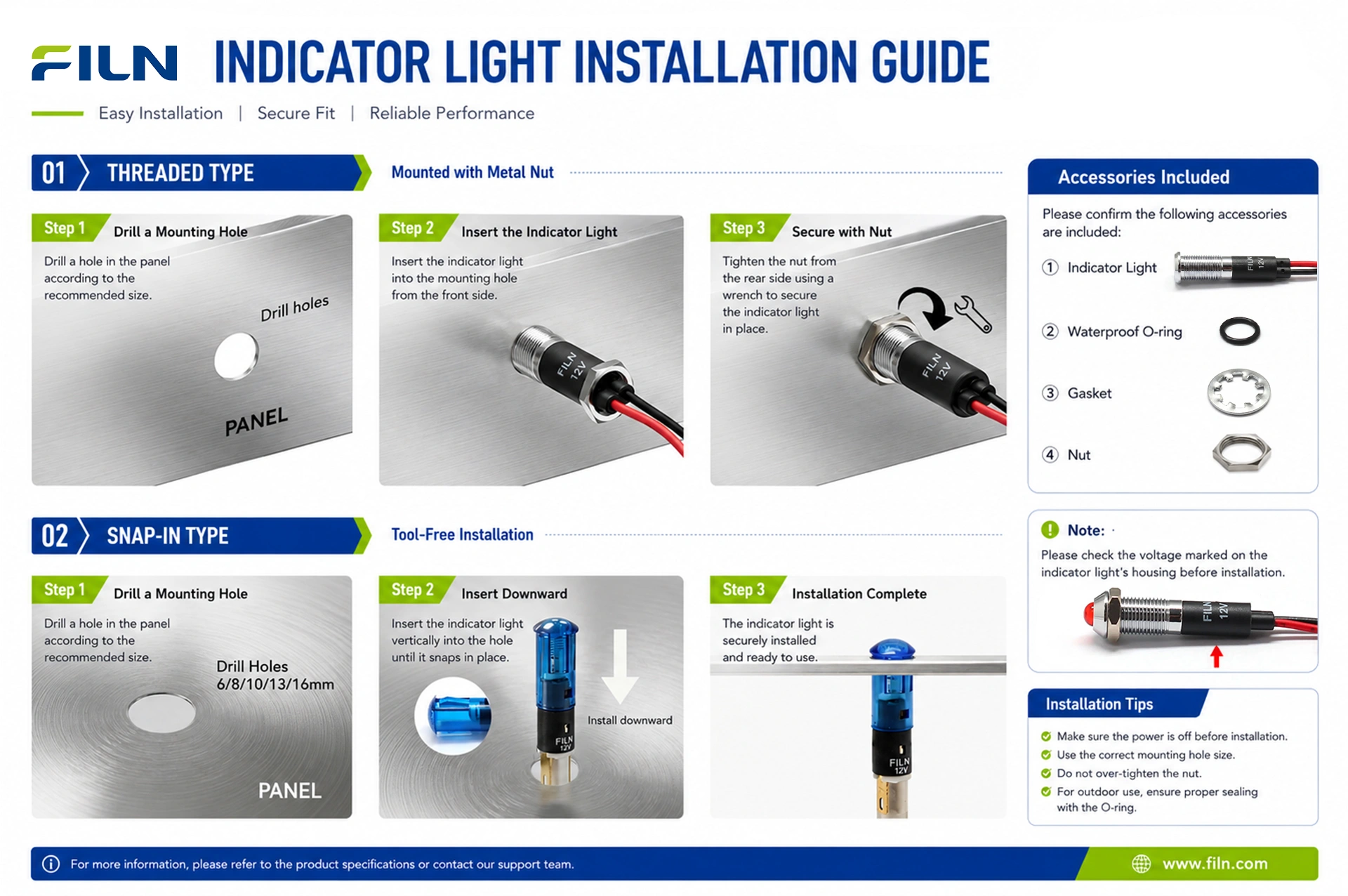
Step-by-Step Installation Guide
Proper mechanical installation ensures IP67 sealing performance and long-term structural stability on industrial control panels.
- Preparation: Gather required tools including a precision drill, 16mm hole punch or step drill, wire strippers, and a torque wrench.
- Panel Machining: Drill or punch a clean 16mm mounting hole in the target metal or composite control panel. Ensure the mounting surface is flat and burr-free.
- O-Ring Placement: Slide the provided silicone waterproof O-ring onto the threaded body of the indicator light before insertion.
- Component Insertion: Insert the indicator housing from the front side of the control panel through the 16mm mounting cutout.
- Securing: Thread the metal hex locking nut onto the rear of the indicator body and tighten securely against the back of the panel to compress the O-ring.
- Electrical Wiring: Connect the power supply leads to the 2pin pin terminals using appropriate insulated receptacles, quick-disconnects, or soldered connections.
- Post-Installation Inspection: Verify mechanical rigidity, check that the indicator is seated straight, and test electrical continuity before energizing the control system.
Electrical Wiring & Termination Guide
Understanding proper wiring methods is vital for ensuring reliable circuit connections and operator safety in industrial electrical installations.
Pin Terminal Indicators (FL1M-16SJ-1): This model features two exposed conductive metal pins (2PIN). Technicians can connect wires using insulated quick-disconnect receptacles, direct soldering with lead-free electrical solder, or wrapping stranded wire securely around the terminal and protecting the joint with heat-shrink tubing or electrical tape. Ensure adequate mechanical strain relief is applied to prevent wire fatigue in high-vibration environments.
Wire Lead Indicators: Indicators supplied with pre-attached wire leads simplify installation by eliminating terminal soldering. Wire leads can be joined to control circuits using spring-clamp terminal blocks, quick-link connectors, or soldered splices insulated with waterproof heat shrink.
Safety Warning: Always disconnect main power supplies and verify zero voltage with a calibrated multimeter before performing any electrical wiring or maintenance operations.
Industry Knowledge & Engineering Best Practices
Industrial signal lights serve as critical human-machine interface (HMI) elements that communicate system states, prevent operator error, and ensure compliance with machinery safety directives. Selecting appropriate components requires evaluating electrical parameters, environmental ingress protection, and mechanical durability.
Engineering standards dictate that indicator colors must conform to international safety color codes to prevent confusion during emergency conditions. Furthermore, selecting metal-bodied indicators over plastic alternatives in harsh manufacturing environments significantly reduces downtime caused by mechanical impact, chemical corrosion, and UV degradation.
Buyer Decision Guide & Material Selection
Choosing the correct metal indicator light involves analyzing environmental exposure, mechanical constraints, and electrical requirements. FILN manufactures metal indicators in multiple shell materials to match specific application demands.
| Shell Material |
Advantages |
Limitations |
Recommended Environment |
| Brass Nickel-Plated |
High mechanical strength, excellent machinability, cost-effective |
Moderate corrosion resistance in saline environments |
General industrial machinery, indoor control panels |
| Stainless Steel |
Superior corrosion resistance, aesthetic finish, extreme durability |
Higher material cost |
Marine equipment, food processing, medical devices |
| Zinc-Aluminum Alloy |
Lightweight, durable, excellent plating adherence |
Lower tensile strength than stainless steel |
Commercial appliances, automation control boxes |
RFQ (Request for Quotation) Checklist
When requesting a quotation or engineering sample from FILN, please provide the following specification details to ensure rapid and accurate technical evaluation:
- Product Series & Model Number (e.g., FL1M-16SJ-1)
- Mounting Hole Size (e.g., 16mm)
- Operating Voltage & Current Type (AC/DC 12V, 24V, 110V, 220V, etc.)
- LED Color (Red, Green, Yellow, Blue, White)
- Head Type (Convex, Flat, Recessed)
- Shell Material (Brass nickel-plated, Stainless steel, Zinc-aluminum)
- Wiring Method (2PIN Pin Terminals or Wire Leads with specified length)
- Ingress Protection Requirement (IP65 / IP67)
- Required Certifications (UL, CE, RoHS, VDE)
- Order Quantity & Target Delivery Schedule
FILN Manufacturing & Engineering Capabilities
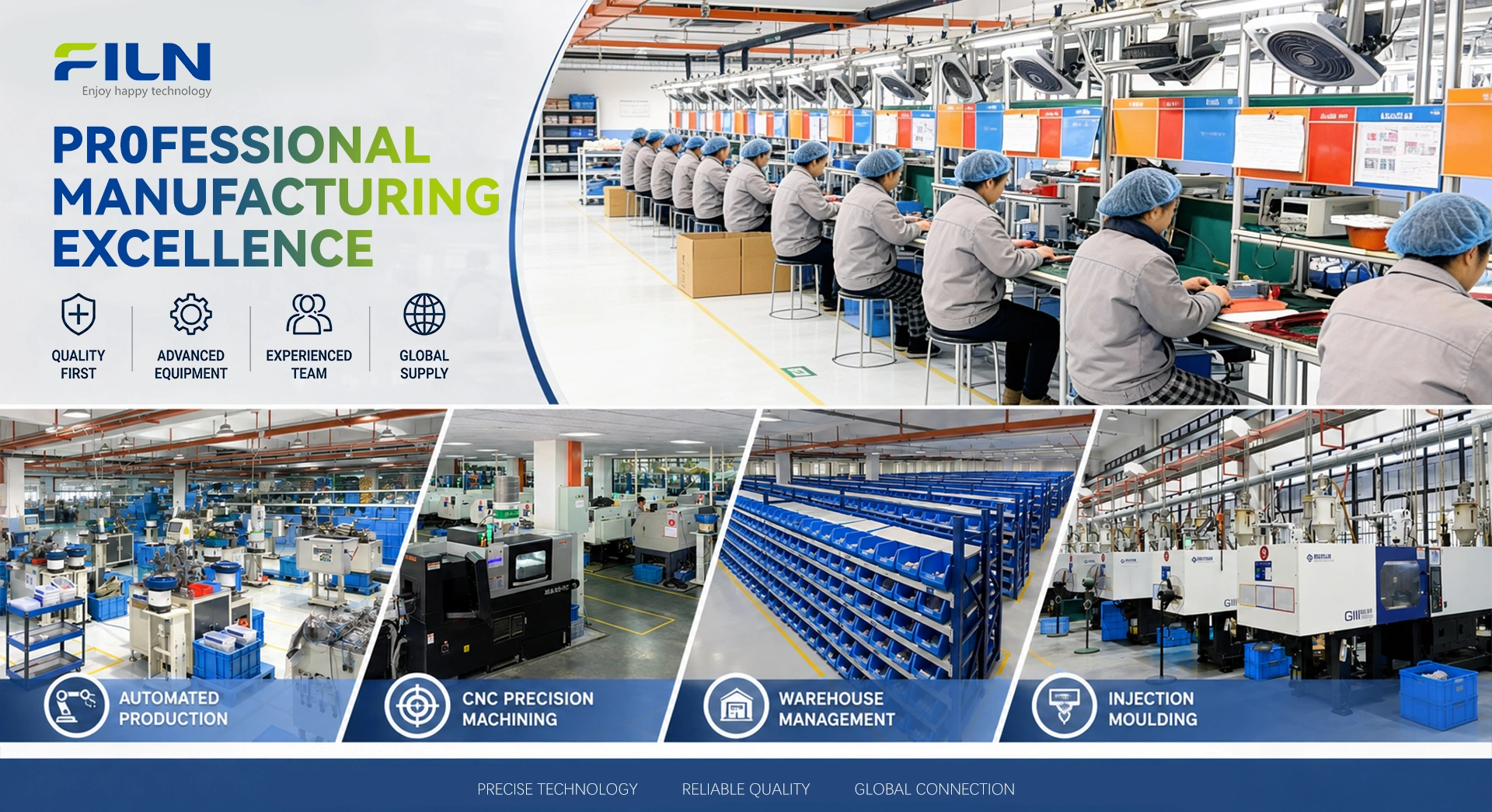
Yueqing Yulin Electronic Co., Ltd. (operating under the global brand name FILN) was established in Wenzhou, Zhejiang in 2006 as a professional electrical switch manufacturer integrating research, development, production, and sales. FILN operates a modern 10,000 square meter manufacturing facility equipped with over 20 advanced automated production lines and an independent testing laboratory. Driven by rigorous scientific processes and the ISO9001 quality management system, FILN delivers industry-leading electrical performance and product innovation.
Our certified product portfolio—including indicator lights, pushbutton switches, rocker switches, and toggle switches—is deployed across more than 100 countries worldwide. FILN products hold prestigious international safety certifications including UL (Certificate Number: E498776), CE, VDE, RoHS, SGS, ISO9001, CCC, and TUV. These components serve critical applications in household kitchen appliances, energy storage systems, EV charging infrastructure, automotive electronics, marine equipment, and industrial security systems.
Manufacturing Advantages & Engineering Support: FILN provides direct access to professional application engineers skilled in resolving complex custom design challenges. Whether developing custom wire harnesses, specialized operating voltages, or bespoke OEM branding, our factory supports flexible batch sizes from custom prototyping to high-volume mass production.
Frequently Asked Questions
How to prevent phantom illumination (faint glowing) in 12v LED indicators?
Phantom illumination or faint glowing in 12v LED indicators is typically caused by leakage current from solid-state controller outputs, Triacs, or long parallel cable runs acting as capacitors. This can be resolved by installing a suitable bleed resistor (resistor parallel to the indicator input) to drain residual stray currents or by ensuring the control switch interrupts the active line completely.
Can this IP67 indicator light be washed down with caustic chemicals?
The FL1M-16SJ-1 metal indicator light features an IP67 rating and a copper alloy shell, making it resistant to water jets and dust. However, when exposed to harsh caustic cleaning chemicals in food processing or medical environments, we recommend selecting our stainless steel shell variant to prevent plating degradation over extended chemical washdown cycles.
What is the difference between pin terminal and wire lead indicator models?
Pin terminal indicators (such as the FL1M-16SJ-1) feature exposed metal pins requiring quick-disconnect receptacles or soldering, offering modular wiring flexibility. Wire lead models come with pre-attached insulated cables, saving assembly time and providing enhanced moisture resistance right out of the box.
Is the FL1M-16SJ-1 indicator certified for international export?
Yes. FILN holds official UL safety certification for its indicator series under certificate number E498776, alongside CE, VDE, RoHS, and ISO9001 compliance, facilitating smooth regulatory approval for equipment exported to North America, Europe, and global markets.
Can FILN customize the operating voltage for specific industrial machinery?
FILN specializes in OEM/ODM custom manufacturing. While standard models cover voltages from 3V to 240V AC/DC, our engineering team can configure custom internal resistance networks to support specialized operating voltages up to 480V upon request.
What panel thickness is compatible with the 16mm metal indicator?
The threaded body and single-nut mounting mechanism are engineered to accommodate standard industrial control panel thicknesses ranging from 1mm up to 6mm. For thicker panels, custom threaded shaft lengths are available upon request.
How do I secure a commercial quotation or request engineering samples?
You can request samples and formal wholesale quotations directly by emailing our sales and engineering team at inquiry@cnylin.com.cn. Please include your required voltage, LED color, quantity, and application environment for prompt assistance.
What is the typical lifespan of the integrated LED element?
The high-brightness LED semiconductor utilized in FILN metal indicators is rated for a continuous working lifespan between 50,000 and 100,000 hours under standard electrical operating parameters and recommended ambient temperatures.