


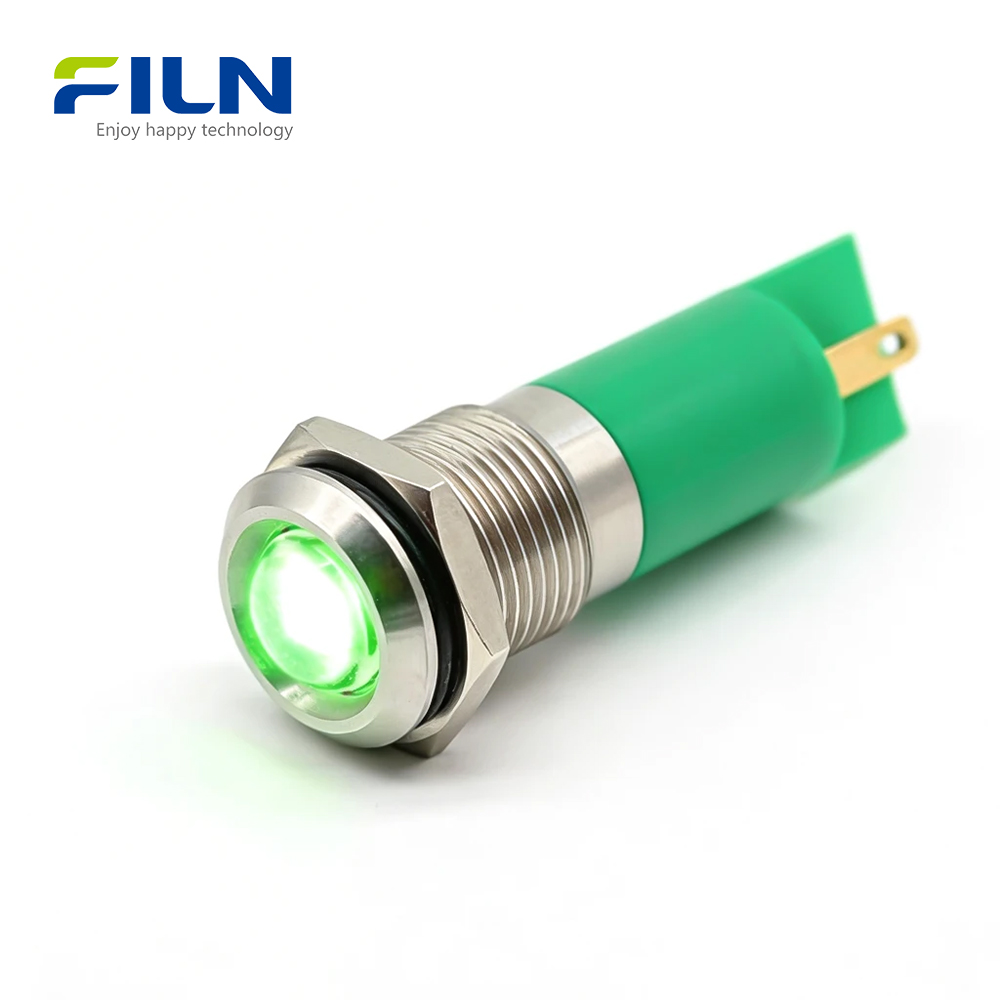
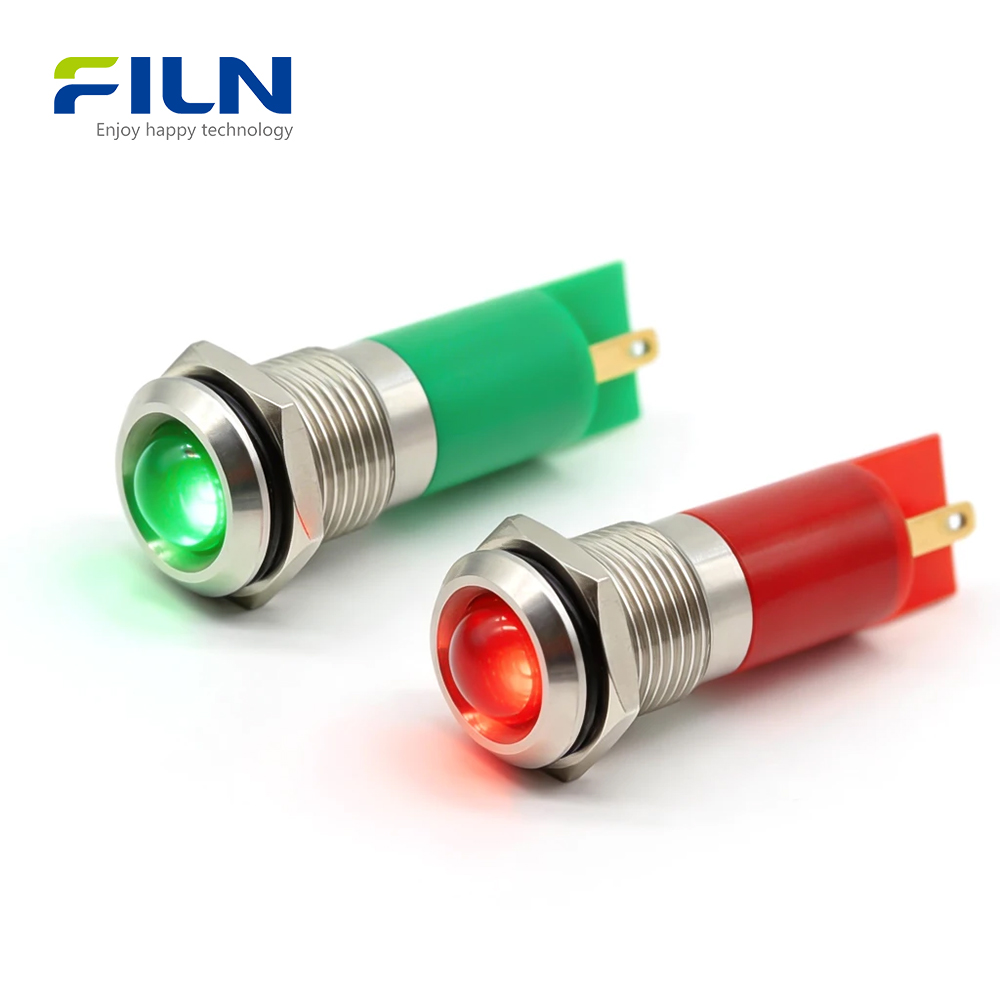
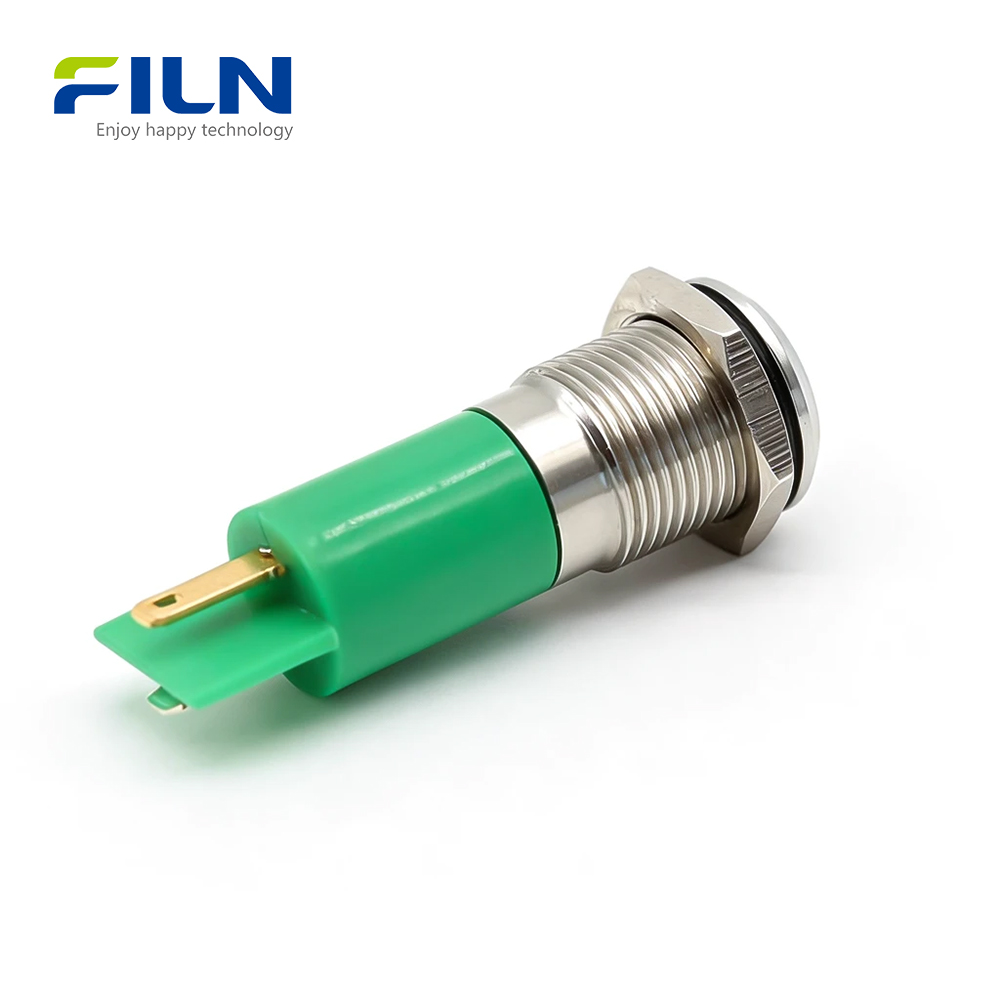
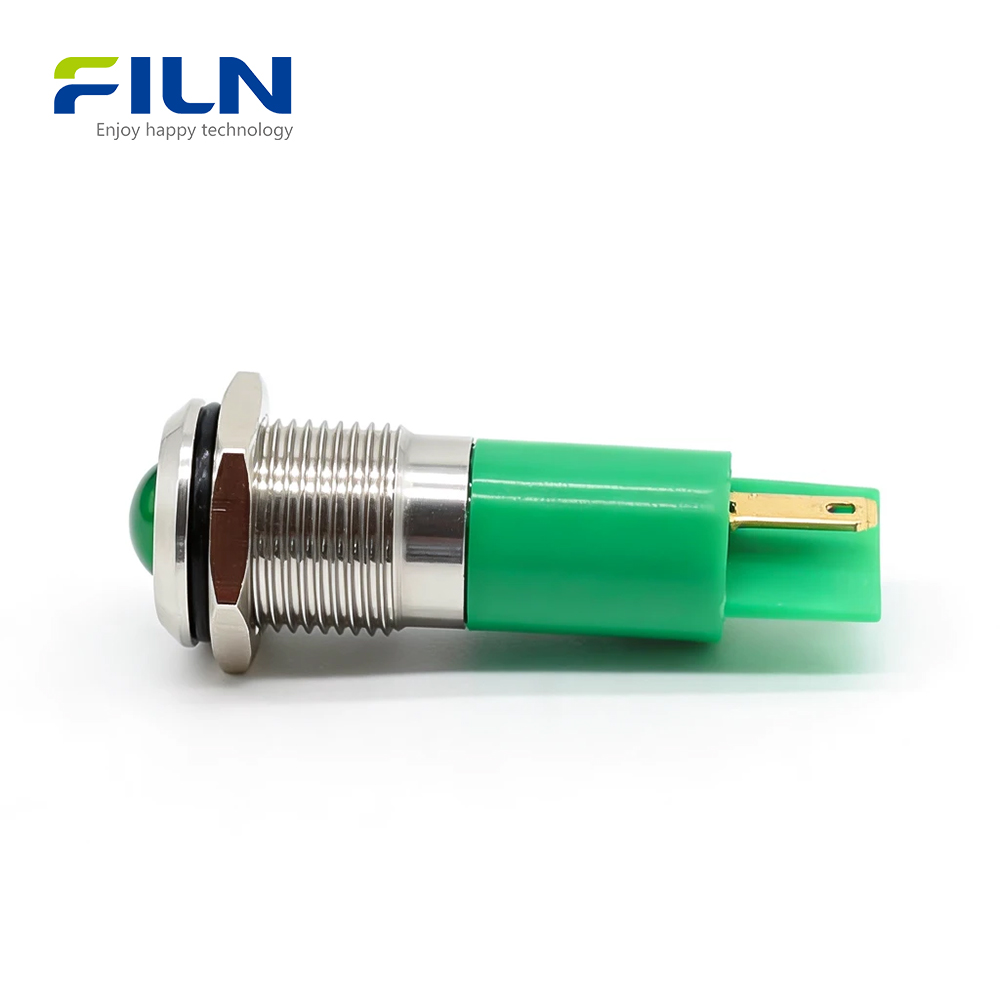
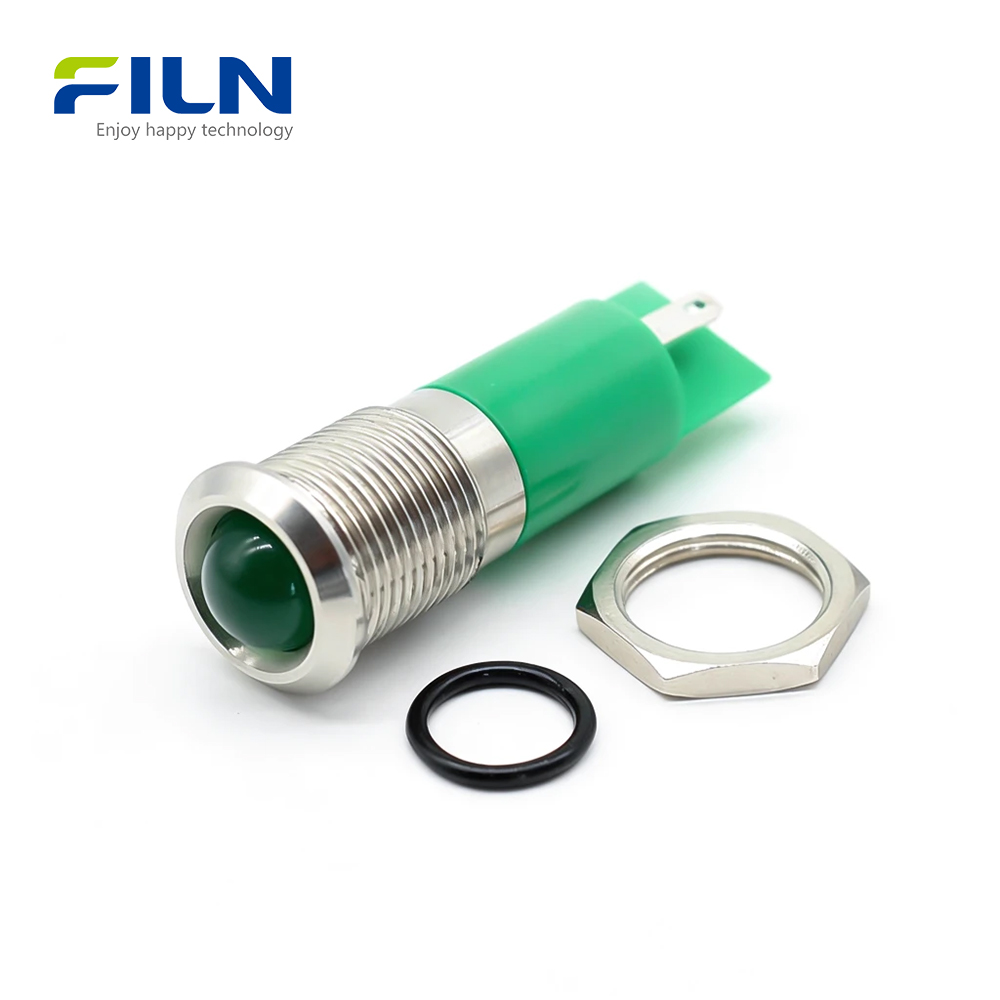


AC 220v LED Indicator Light Metal 14mm 2Pin CE Certified | FILN
Product Specifications
• Model: FL1M-14SJ-2
• Color: Red, Green, Yellow, Blue, White (RGYBW)
• Shape: Convex head
• Material: Copper alloy or black zinc-aluminum alloy shell
• Finish Type: Metal finish
• Light Source Type: High-brightness LED
• Rated Voltage: Custom 3V to 250V (optimized for 5-24V and 110-220V)
• Rated Current: Customizable
• Mounting Type: Panel mount
• Terminal / Wiring: Dual-pin metal terminals
• Protection Rating: IP65/IP67 ingress protection with integrated silicone O-ring
• Product Size: 14 mm (0.55 inch)
• Certifications: CE, TUV, RoHS, VDE, ISO9001 Certified
• Other Key Specifications: Factory-direct manufacturer FILN
• Email: inquiry@cnylin.com.cn
• Model: FL1M-14SJ-2
• Color: Red, Green, Yellow, Blue, White (RGYBW)
• Shape: Convex head
• Material: Copper alloy or black zinc-aluminum alloy shell
• Finish Type: Metal finish
• Light Source Type: High-brightness LED
• Rated Voltage: Custom 3V to 250V (optimized for 5-24V and 110-220V)
• Rated Current: Customizable
• Mounting Type: Panel mount
• Terminal / Wiring: Dual-pin metal terminals
• Protection Rating: IP65/IP67 ingress protection with integrated silicone O-ring
• Product Size: 14 mm (0.55 inch)
• Certifications: CE, TUV, RoHS, VDE, ISO9001 Certified
• Other Key Specifications: Factory-direct manufacturer FILN
• Email: inquiry@cnylin.com.cn
About this item
• Main Advantage: The FL1M-14SJ-2 delivers highly visible status signaling via a convex head design, replacing fragile plastic parts for industrial reliability.
• Durability & Reliability: Constructed with a rugged metal shell and integrated silicone O-ring, ensuring IP65/IP67 waterproof protection and stable operation in harsh environments.
• Installation & Compatibility: Engineered for panel installation utilizing a 14 mm (0.55 inch) mounting size and dual-pin metal terminals for secure electrical connections.
• Applications: Designed for industrial automation cabinets, experimental setups, and heavy machinery operating worldwide requiring dependable signal feedback.
• OEM & ODM: Factory-direct support provides custom voltage configurations, color options, and bulk wholesale procurement to match precise engineering requirements.
• Main Advantage: The FL1M-14SJ-2 delivers highly visible status signaling via a convex head design, replacing fragile plastic parts for industrial reliability.
• Durability & Reliability: Constructed with a rugged metal shell and integrated silicone O-ring, ensuring IP65/IP67 waterproof protection and stable operation in harsh environments.
• Installation & Compatibility: Engineered for panel installation utilizing a 14 mm (0.55 inch) mounting size and dual-pin metal terminals for secure electrical connections.
• Applications: Designed for industrial automation cabinets, experimental setups, and heavy machinery operating worldwide requiring dependable signal feedback.
• OEM & ODM: Factory-direct support provides custom voltage configurations, color options, and bulk wholesale procurement to match precise engineering requirements.

SUMMARY
The FILN FL1M-14SJ-2 is an industrial-grade AC 220v led indicator light featuring a rugged 14mm metal body with a highly visible convex head design. Engineered for harsh environments, this premium signal lamp offers a robust alternative to fragile plastic components, utilizing either a silver-toned copper alloy or a sleek black zinc-aluminum alloy shell. Equipped with high-brightness LED elements available in Red, Green, Yellow, Blue, and White (RGYBW), it delivers clear status signaling across dual-pin metal terminals. Offering IP65/IP67 ingress protection via an integrated silicone O-ring, it functions seamlessly across a broad voltage range of 3V to 250V (optimized for 5-24V and 110-220V applications). Certified by CE, TUV, and RoHS, this panel-mount indicator is built by factory-direct manufacturer FILN for industrial automation cabinets, experimental setups, and heavy machinery operating worldwide.
KEY TAKEAWAYS
- Convex Head Design: Features an elevated 14mm convex profile to maximize multi-angle visual recognition on dense electrical panel configurations.
- Premium Metallic Shells: Available in high-strength silver copper alloy or black-finished zinc-aluminum alloy to eliminate cracking, UV degradation, and thermal deformation common to plastic lights.
- Broad Operating Voltage: Supports a wide electrical envelope from 3V to 250V, with standardized internal engineering optimized for 5-24V DC and 110-220V AC systems.
- Simplified 2PIN Installation: Utilizes dual-pin metal tabs for rapid soldering or quick-connect terminal attachment, minimizing installation cycle times during cabinet building.
- IP67 Environmental Ingress Protection: Achieved through a precision-molded silicone sealing washer and robust internal potting, preventing water and oil intrusion under high-pressure conditions.
- Multi-Color Spectrum Availability: Engineered with advanced LED dies across five primary industrial signaling colors: Red, Green, Yellow, Blue, and White (RGYBW).
- Secure Single-Nut Mounting: Threaded structural body relies on a rear hex-nut lock system and premium stainless steel star washer to resist severe vibration decoupling.
- Global Compliance Profiles: Extensively audited and certified to meet international electrical safety directives including CE, TUV, CB, RoHS, and REACH.
- Factory-Direct Customization: Manufactured within FILN’s dedicated ISO9001 facility, guaranteeing direct supply chains, rapid prototyping, and zero minimum order quantity restrictions.
WHAT IS AN AC 220V LED INDICATOR LIGHT
An AC 220v led indicator light is a heavy-duty optoelectronic device designed to translate electrical current into visible status signaling within industrial control circuits. Positioned as a fundamental element in machine safety interfaces, it instantly communicates system statuses such as power live, sequence running, faults, or localized hazards to human operators. This device is optimized structurally for clean panel integration, providing structural feedback loops that maintain overall workflow rhythm and site safety protocol execution.
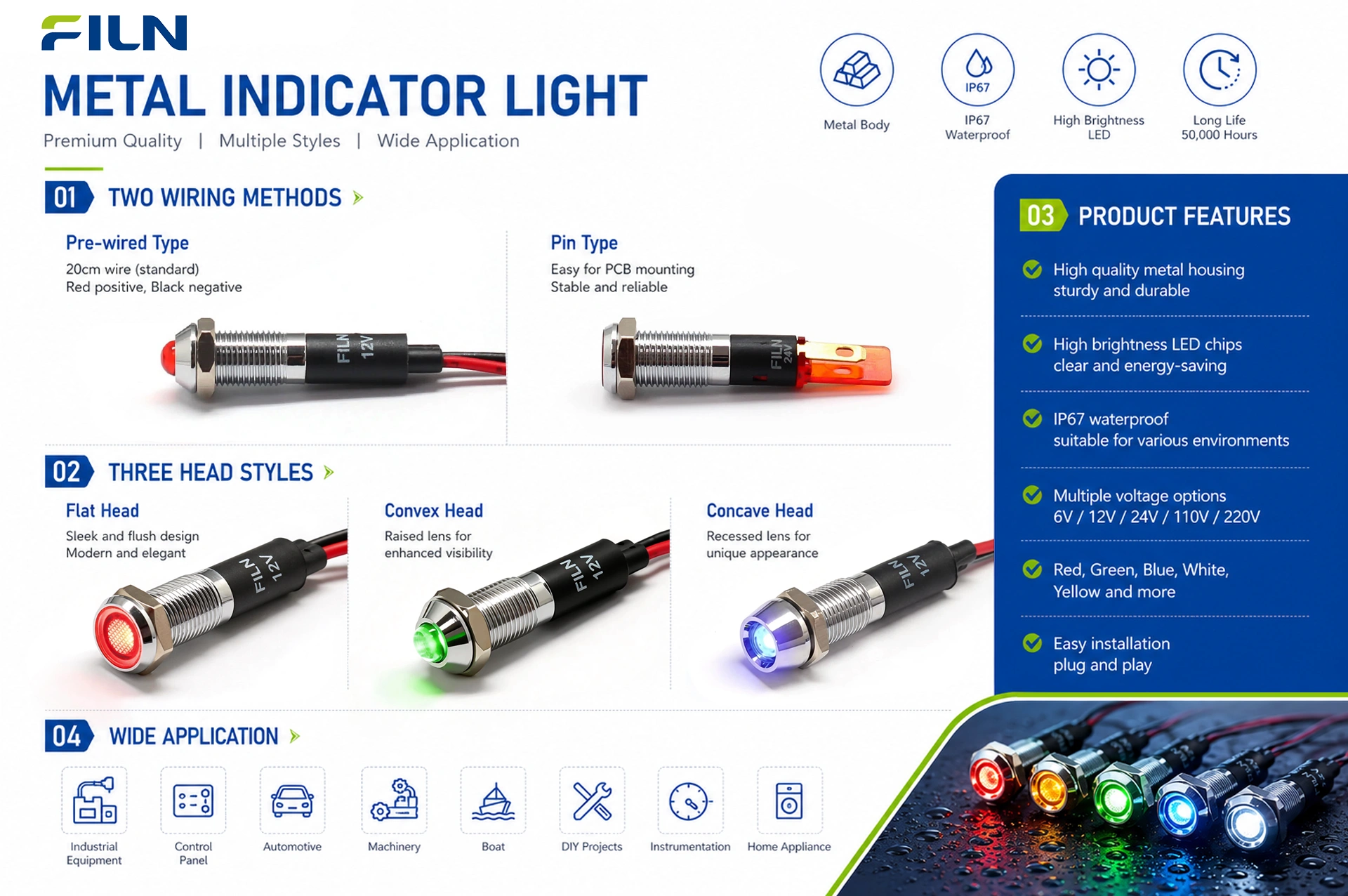
Modern panel indicators are broadly classified into two material families: metal-shelled indicator lights and plastic-shelled indicator lights. While plastic units satisfy light-duty commercial environments, industrial engineering favors metal enclosures for structural resilience. Mounting configurations span precision diameters from 6mm to 30mm, accommodating space-constrained instrumentation or high-visibility large-scale layouts. Wiring interfaces are similarly specialized, offering either rigid 2-pin quick-connect terminals or integrated factory-insulated wire leads to match divergent production-line practices.
To align with complex aesthetic and ergonomics layouts, metal indicators are manufactured across three distinct face designs: flat head, round/convex head, and concave head. The flat head provides a flush, clean layout that minimizes accidental touch activation. The convex head extends prominently beyond the panel plane to provide wide-angle peripheral visibility across large floor spaces. The concave head recesses the optical lens to protect the luminescent surface against mechanical abrasions, falling debris, or high-impact contact common in automated fabrication environments.
The widespread adoption of metal indicator lights stems from their superior structural lifespan under stress. Unlike plastic alternatives which exhibit yellowing, embrittlement, and thermal cracking under persistent exposure to UV rays or elevated ambient heat, metallic bodies sustain structural stability. Combined with integrated vibration resistance and robust sealing options, these resilient components serve as foundational building blocks for modern control station panels, processing plants, power grids, and critical electrical equipment infrastructure worldwide.
PRODUCT OVERVIEW
The FILN FL1M-14SJ-2 manifests advanced industrial design, operating as a 14mm convex head metal signal device purpose-built to withstand brutal environments. Internally, the component links a high-performance Solid-State gallium-based LED matrix with a protective carbon film current-limiting resistor network. When an electrical potential up to 220V AC is injected across the dual-pin copper terminal tabs, electron recombination inside the semiconductor junction generates clear, uniform light emission across the multi-angle polycarbonate lens.
Mechanically, the assembly relies on a precision-machined threaded barrel that establishes a stable mechanical connection with the main equipment faceplate. The presence of a dedicated silicone O-ring allows the structure to seal completely against raw moisture, cutting fluids, and fine particulates, achieving certified IP65 and IP67 ingress protection ratings. This ensures long-term electrical insulation and mitigates common short-circuit risks that degrade unsealed control panel frameworks over extended deployment lifecycles.
This 14mm metallic pilot unit is engineered for power distribution systems, medical control consoles, automation assembly networks, and maritime instrument dashboards. Its heavy-duty composition withstands persistent mechanical vibration, mechanical impacts, and chemical cleaner spray downs, outperforming light-duty plastics. Backed by rigorous international regulatory verifications including CE, RoHS, and TUV, the FL1M-14SJ-2 provides procurement officers and design engineers with an authoritative, long-life solution for critical status-monitoring architecture.
QUICK SPECIFICATIONS
| Technical Parameter Attribute | Specification Values & Field Performance Standards |
|---|---|
| Product Description | 2PIN Pin Type |
| Model Identifier | FL1M-14SJ-2 Series |
| Mounting Hole Dimension | 14.0 mm / 0.551 inches panel cutout diameter |
| Operational Voltage Options | 3V to 250V AC/DC range; standardized for 5-24V and 110-220V configurations |
| Available LED Illumination Colors | Red, Green, Yellow, Blue, White (RGYBW spectrum) |
| Waterproof / Ingress Protection | IP65 / IP67 certified environmental protection level |
| Wiring Configuration Type | 2PIN Metal soldering lugs / Integrated flexible wire lead options |
| Optical Face / Head Typology | Convex head profile (Flat or standard round heads available on request) |
| Surface Finishing Quality | Smooth, burr-free exterior; zero oxidation scaling, zero structural cracks |
| Mechanical Assembly Standard | Flawless head-to-base component integration; zero rotational slip, zero tilt misalignment |
PERFORMANCE PARAMETERS
| Electrical & Lifespan Metric | Certified Engineering Value Limits |
|---|---|
| Rated Working Voltage Range | 3V to 240V DC/AC (Fully customizable based on project engineering scope) |
| Alternating Current Frequency Range | 50 Hz to 60 Hz standard power grid adaptation |
| Rated Operating Current Draw | ≤ 20 mA at continuous electrical excitation |
| Total Rated Power Dissipation | Approximately 0.2 Watts maximum energy footprint |
| Insulation Electrical Resistance | ≥ 100 MΩ (Verified between terminal lead and conductive outer shell via DC 500V test) |
| Dielectric Insulation Breakdown Strength | 1500V to 1800V AC testing phase; zero dielectric breakdown or flashover arcing |
| Operational Luminous Working Life | 50,000 Hours to 100,000 Hours continuous emission profile |
| Ingress Protection Level Verification | IP67 absolute dust-tight and immersion-ready barrier |
COMPONENT MATERIALS
| Accessory / Component Sub-Part Name | Selected Engineering Material Compositions | Industrial Design Justification & Application Value |
|---|---|---|
| Exterior Main Shell Housing | Copper Alloy (Nickel/Chrome plated) / Black Zinc-Aluminum Alloy | Provides absolute mechanical impact defense, structural integrity, and long-term anti-oxidation properties. |
| Internal Lamp Holder Unit | Polyamide 66 (PA66 Nylon) | Ensures high thermal insulation threshold, flame-retardant capability, and structural rigidity. |
| Optical Lens Lampshade | Polycarbonate (PC) | Delivers optimal light transparency, UV resistance, and crack avoidance under thermal fluctuations. |
| Internal Luminescent Source | High-Brightness Solid State LED Die Matrix | Generates intense luminous output, low current consumption, and multi-decade operating performance. |
| Current Protection Resistance | Carbon Film Resistance Module | Secures electrical current clamping stability, protecting semiconductor dies from voltage spikes. |
| Conductor Wireway Systems | Polyvinyl Chloride (PVC) Insulated Multi-Strand Copper | Provides flexible layout configurations and dependable dielectric pathways. |
| Rear Fastening Mounting Nut | Copper Alloy | Maintains high thread stripping thresholds during aggressive mechanical installation torquing. |
| Waterproof O-Ring Seal | Silica Gel (Silicone Elastomer) | Forms an airtight, compressible boundary sealing against liquids and extreme environmental shifts. |
| Anti-Vibration Lock Washer | Stainless Steel (Plum Blossom / Star pattern) | Exerts multi-point tension tracking to prevent thread loosening on heavy industrial machinery. |
ENVIRONMENTAL PERFORMANCE Profiles
Application Engineering Scope: This testing regime defines the general operating parameters and limits for the FILN Metal Indicator Light Series, verifying mechanical and structural survival thresholds across hostile deployment zones.
| Environmental Testing Standard Matrix | Certified Engineering Metric Limits |
|---|---|
| Component Part Designation | Heavy Duty Industrial Metal Indicator Light |
| Operating & Storage Temperature Envelope | -40°C to +80°C continuous thermal window |
| Operating Relative Humidity Maximums | ≤ 85% Non-condensing relative humidity maintained at +40°C |
| High Temperature Endurance Verification | 96 Continuous hours inside chamber fixed at 80±2°C; zero physical deformation |
| Low Temperature Cryogenic Survival Test | 96 Continuous hours inside deep freeze at -40±2°C; zero lens clouding or body brittleness |
| Constant Humidity & Temperature Stability | 96 Hours exposed to 40±2°C with humidity scales at 90% to 95% RH; zero insulation degradation |
| Thermal Shock Cycling Endurance Test | Alternating cycles between -40°C (30min) and 85°C (30min) for 5 complete loops; zero seal separation |
LED ELECTRO-OPTICAL SPECIFICATIONS
1. Absolute Maximum Ratings
| LED Semiconductor Boundary Threshold Parameter | Absolute Maximum Safety Limits |
|---|---|
| Maximum Forward Peak Current | 20 mA maximum continuous flow limit |
| Absolute Reverse Junction Voltage | 5 V threshold limit |
| Total Power Dissipation Internal Capacity | 60 mW limit |
| Operating Temperature Threshold Range | -40°C to +80°C safe range |
| Storage Temperature Safe Range Envelope | -40°C to +100°C protection range |
| Lead-Free Reflow Soldering Temperature | Maximum 260°C exposure limit sustained for up to 3 seconds |
2. Electro-Optical Characteristics
| Optical / Semiconductor Test Condition | Standard Operating Test Conditions (Ambient Temperature Ta = 25°C) |
|---|---|
| Forward Operating Voltage | Tested at a forward current of 20 mA; forward voltage ranges from a minimum of 2.8 V to a maximum of 3.2 V |
| Leakage Reverse Current Leak | Tested at reverse voltage of 5 V; maximum reverse current is limited to 5 μA |
| Spatial Luminous Angle | Tested at a forward current of 20 mA; typical viewing angle is 60° |
| Luminous Intensity | Tested at a forward current of 20 mA; luminous intensity ranges from a minimum of 500 mcd to a maximum of 800 mcd |
| Recommended Working Current | Typical continuous operation baseline is 20 mA |
| Dominant Color Emission Wavelength | Tested at a forward current of 20 mA; standard wavelength range is 520 nm to 525 nm |
| Internal Semiconductor Junction Temp | Capped at a maximum operational running limit of 125°C at 20 mA |
| Thermal Resistance Interface Coefficient | Tested at a forward current of 20 mA; typical thermal resistance rating is 8°C per watt |
STANDARD TEST CONDITIONS
Unless explicitly specified within a distinct project specification datasheet, all electrical and electro-optical performance values are recorded under standard international laboratory atmospheric baselines defined below:
| Atmospheric Parameter Criteria | Standard Calibration Target Ranges |
|---|---|
| Ambient Ambient Temperature | 5°C to 35°C standard range |
| Relative Atmospheric Humidity Scales | 45% to 85% RH bounds |
| Barometric Air Pressure Matrix | 86 kPa to 106 kPa (Equivalent to 860 mbar to 1060 mbar) |
Engineering Verification Notes: Luminous intensity mappings and dominant color spectral wavelengths are calibrated using optical goniosphotometers in strict accordance with the CIE international standard human eye spectral response curve. The certified tolerance thresholds for human eye response calibration are restricted to ±15% for luminous intensity assessments and ±0.1V for forward operational voltage tracking.
APPLICATIONS BY INDUSTRY
Featuring high-strength plated copper alloy or premium stainless steel housings, metal indicator lights deliver high impact strength and IP67 dust and moisture exclusion barriers. These rugged components are preferred for high-stress manufacturing sectors and commercial equipment installations. Compared to plastic pilot lights that fail early due to ultraviolet embrittlement, stress cracking, and high-temperature deformation, metallic assemblies survive high-frequency actuation cycles in extreme industrial settings.
1. Industrial Automation & CNC Machining Centers
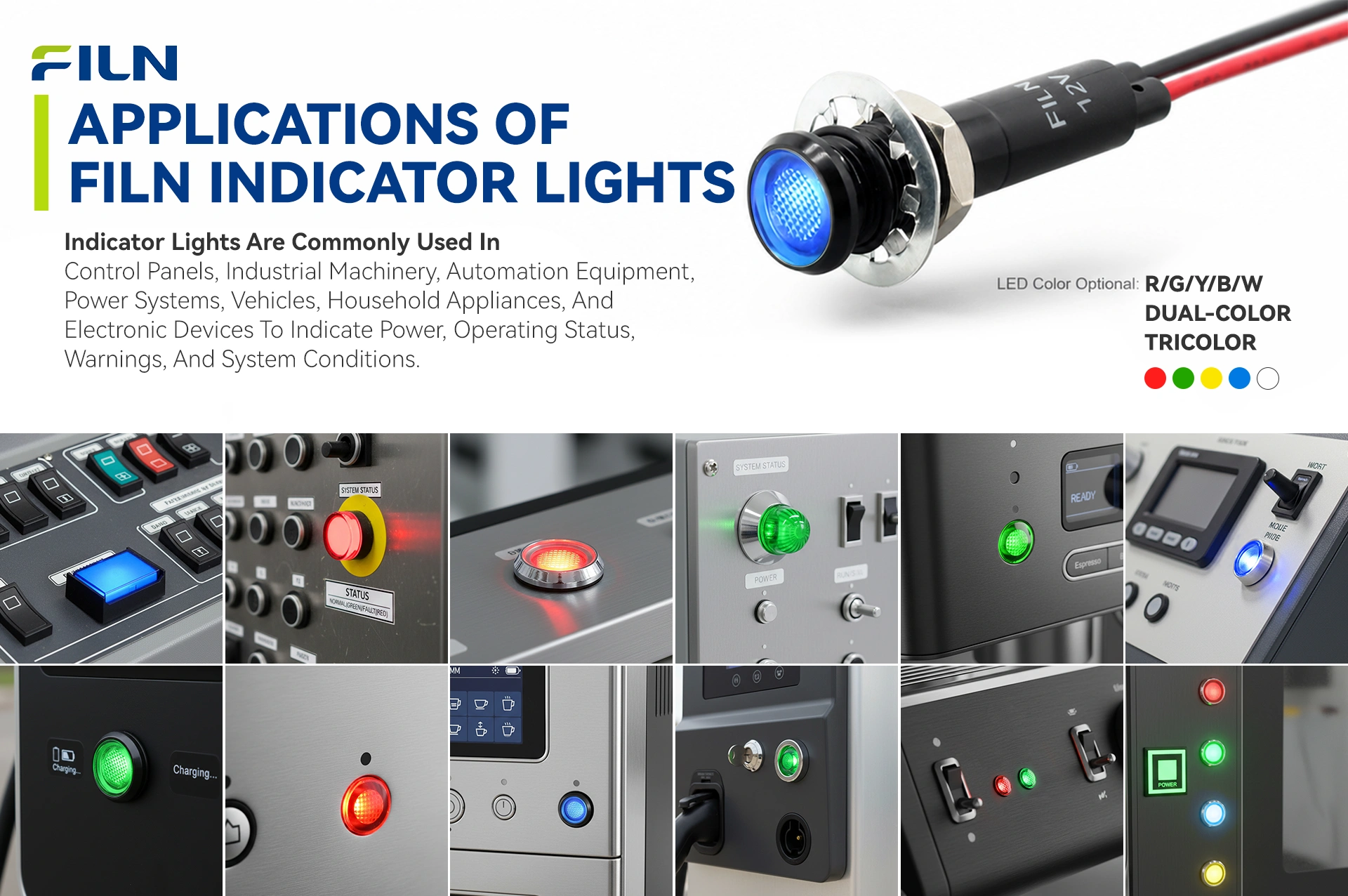
Factory floors expose operator components to mechanical vibrations, airborne coolant mists, lubricating oils, and flying shard debris. Metal indicator lights integrate tightly into CNC machine control facias and main automated line PLC cabinets to represent active status parameters safely. In these configurations, green indicates standard operation, yellow warns of tool adjustments or idle cycles, and red triggers emergency stops or fault conditions. The solid metallic enclosure prevents structural degradation from cutting fluids and abrasive metal shavings.
Furthermore, large power distribution networks and PLC control panels use compact 6mm or 8mm metal status lamps to handle 24VDC control circuits or 220VAC power paths. In high-vibration applications like hydraulic pumps or compressed-gas infrastructure, pre-wired integrated metal indicator configurations provide dependable durability over pin-terminal connections, preventing physical separation or failure due to harmonic resonance.
2. Outdoor Infrastructure, Renewable Energy, & EV Charging Stations
Outdoor electrical infrastructure faces extreme weather changes, solar radiation, and sub-zero winter temperatures. Public electric vehicle charging kiosks use flat-head or convex metal LED indicators to signify localized charging statuses. Blue or green pulses represent an active power transfer sequence, steady illumination signifies full cell saturation, and red warns of ground fault leakage or insulation breakdown. The robust IP67 seal and impact-resistant housing protect against vandalism and heavy rain.
Similarly, remote utility photovoltaic combiner boxes and outdoor municipal grid switches use these resilient metallic lamps to track high-voltage grid connections and inverter lifecycles. Operating reliably within an extended thermal window of -40°C to +80°C, these components ensure continuous uptime during severe seasonal temperature swings.
3. Heavy Duty Transit, Rail Systems, & Marine Applications
Heavy transit and maritime operations require resistance to intense mechanical shock, dust ingress, and corrosive atmospheres. Heavy excavator, crane, and bulldozer dashboards rely on these metal indicators to track vital engine metrics, oil pressures, system temperatures, and brake system engagement. The robust metal housings withstand dusty job sites and mechanical shock waves.
For maritime bridges and engine room panels, chrome-plated or stainless steel housings prevent salt spray corrosion and pitting. Paired with tight silicone panel gaskets, they stop seawater intrusion to protect sensitive electrical circuits.
4. Public Interactive Kiosks & Explosion-Risk Safety Fields
Unsupervised public ticketing terminals, automated vending machines, and urban security intercoms require rugged, impact-resistant user interfaces. Metal indicators provide robust resistance to physical damage while signaling transaction stages like payment processing, product dispensing, or change return. At hazardous fuel dispensing points, the solid metal enclosure provides reliable electrical isolation to enhance explosion-proof safety.
5. Medical Instruments & Sanitary Food Processing Machinery
Food packaging and medical washdown facilities utilize aggressive high-pressure hot water and chemical sanitizers to maintain hygiene standards. IP67-rated metal indicators withstand chemical spray downs and moisture ingress without degradation. In medical sterilization enclosures, these indicators clearly display operational stages like heating, sterilization, and exhaust venting.
Selection Summary
Standard plastic indicators face accelerated aging, UV yellowing, and cracking from factory oils and outdoor weathering, while vibration can cause loose connections. FILN’s metal indicator lights—built with premium copper or zinc housings, silicone seals, and integrated connections—eliminate these failure points to ensure dependable, long-term equipment operation.
INDUSTRIAL COLOR CODING DISCIPLINE (R/G/Y/B/W)
In modern industrial operations, color-coded signaling functions as a critical safety and operational language. To prevent communication errors among operators, the five core LED colors (RGYBW) follow standardized global electrical conventions, including IEC 60204-1 and NFPA 79 frameworks.
- Red (Emergency / Danger / Fault Status): Signifies critical system anomalies, circuit trips, over-temperature conditions, or emergency shutdowns. Red demands immediate operator intervention to prevent equipment damage or personal injury.
- Green (Safe State / Normal Operation): Confirms active safety loops, normal operational parameters, or energized circuits running within nominal tolerances. Green indicates the area or process is safe to monitor standard production.
- Yellow / Amber (Abnormal Condition / Warning / Attention): Identifies marginal operating limits, thermal pre-warnings, or automated processes transitioning between stages. Yellow signals operators to prepare for adjustments before a fault develops.
- Blue (Mandatory Action Required Status): Indicates specific operator steps must be completed before a process can proceed, such as loading materials, executing reset protocols, or running fluid replacement cycles.
- White (Neutral Status / Power Present Presence): Provides basic utility feedback, such as verifying the mains line voltage is active, an isolated sub-circuit is energized, or indicating standard system standby.
In specialized control systems, colors can take on distinct situational meanings based on custom facility protocols. For example, in specific power generation plants, Red may indicate a closed circuit breaker (live power line flow), while Green confirms an open circuit breaker (isolated safe line), which is the opposite of standard machinery color meanings. Additionally, flashing states can be used alongside steady illumination to emphasize urgency, with a rapid flash denoting higher critical priority than a solid light.
To address advanced system requirements, FILN engineers high-performance bi-color and tri-color integrated metal indicators. These multi-wavelength options pack independent LED dies into a single 14mm housing, allowing one indicator to display multiple system states (e.g., Red/Green or Red/Yellow/Green), saving panel space and simplifying complex visual interfaces.
PANEL STEP-BY-STEP INSTALLATION GUIDE
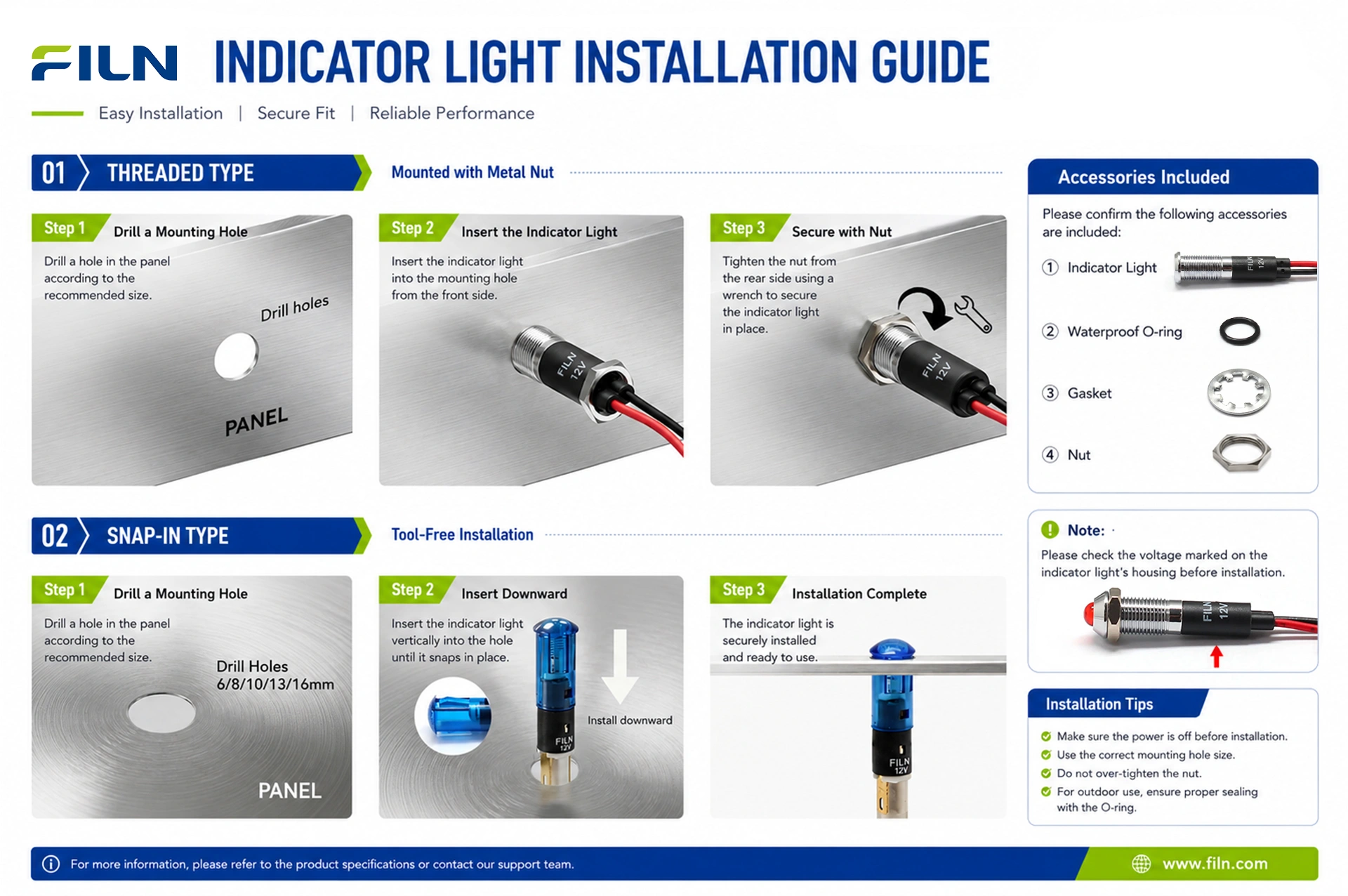
Proper installation of the 14mm convex head metal indicator light ensures structural integrity, reliable electrical contact, and long-term IP67 ingress protection. Follow this standardized mechanical assembly sequence:
- Panel Layout and Cutout: Mark the center point on your panel facade and drill a clean 14.0 mm circular mounting hole using a stepped drill bit or chassis punch. Remove any sharp metal burrs from both sides of the cutout to ensure a flat, secure seating surface.
- Gasket Alignment: Slide the provided flexible silicone waterproof washer over the threaded metal body of the indicator, seating it flush against the underside of the convex head.
- Chassis Insertion: Insert the indicator assembly into the 14mm cutout from the front face of the panel, pushing it inward until the silicone gasket presses flat against the exterior sheet metal.
- Rear Securing: From behind the panel, slide the stainless steel star lock washer over the 2PIN terminal base onto the threaded shaft, followed by the copper alloy locking hex nut.
- Final Torque Adjustment: Hand-tighten the hex nut clockwise, then secure it using an open-ended wrench. Tighten until the front silicone gasket compresses slightly to form a watertight seal, avoiding over-torquing which could strip the threads.
- Electrical Termination: Connect your 220V AC circuit wires to the 2pin metal terminals using proper soldering techniques or insulated quick-connect female lugs, completing the installation.
CRITICAL SAFETY WARNING: Always disconnect and lock out the main power source before starting installation or wiring. Verify the circuit is completely de-energized with a calibrated voltage meter to prevent electrical shock or serious injury.
ELECTRICAL TERMINATION & WIRING INFRASTRUCTURE
Electrical terminations for the FILN 14mm metal indicator light line must match the specific model variation selected: pin-lug connections or factory-integrated wire leads. Pin-lug variations feature two rigid, silver-plated copper alloy tabs protruding from the rear polyamide base. These pins are designed for direct low-resistance soldering or matching female quick-connect terminal lugs, which simplify field replacements in dense automation racks.
For factory-insulated pre-wired variations, the integrated conductors can be spliced into control loops using several approved methods. Quick-connect lever nuts or screw terminal blocks provide reliable, reusable termination points. For high-vibration applications, conductors should be spliced using rosin-core solder and sealed with adhesive-lined polyolefin heat-shrink tubing or premium electrical wrap to maintain dielectric insulation and prevent moisture intrusion.
VIEW FULL MASTER CATALOG OF FILN METAL INDICATOR LIGHT ARCHITECTURES
Explore our comprehensive range of premium metal panel indicators from 6mm to 30mm with worldwide engineering support.
INDUSTRY KNOWLEDGE CENTER
How Solid-State Signaling Operates: Unlike traditional incandescent lamps that rely on fragile tungsten filaments heated to high temperatures, modern metal LED indicators use solid-state electroluminescence. When a voltage is applied across the semiconductor junction, electrons recombine with electron holes to release energy as photons. This direct energy conversion produces minimal heat and eliminates filament degradation, allowing the component to withstand persistent mechanical vibrations and shock profiles.
Why Metal Housing Matters: Industrial facilities present challenging conditions, including airborne oils, chemical fumes, and accidental mechanical impacts. Standard polycarbonate or ABS plastic housings can suffer from accelerated material fatigue, environmental stress cracking, and UV degradation when exposed to sunlight or chemical washes. Machined copper or zinc-aluminum alloy shells provide high structural integrity, protecting internal optical components and maintaining a reliable ground barrier against potential high-voltage short circuits.
Common Installation Mistakes: A frequent installation error is over-torquing the rear hex lock nut during assembly. Applying excessive torque can strip the fine threads on the metal barrel or distort the silicone gasket, which compromises the moisture seal and can lead to water intrusion. Another common issue is using improper soldering temperatures on 2pin terminals; exceeding recommended thermal limits can soften the internal polyamide holder and cause terminal misalignment or component failure.
Preventative Maintenance Guide: Solid-state indicators require no internal service parts, but routine external checks enhance system reliability. Periodically inspect front facias during plant maintenance to ensure the silicone sealing rings remain flexible and free from cracking. Check rear wire terminations to ensure connections remain tight and free from corrosion, and wipe down optical lenses to remove dust or oil buildup that could lower visibility.
B2B BUYER DECISION GUIDE
Selecting the correct indicator configuration requires matching mechanical, electrical, and environmental specifications to your application. Use this engineering checklist to optimize your component selection:
- Voltage Level Calibration: Match your supply voltage to the internal resistor rating. While the 220V AC configuration is standard for main power distribution panels, 5-24V DC configurations are preferred for low-voltage PLC logic control circuits.
- Chassis Space Constraints: Measure your panel thickness and available rear depth. The 14mm cutout diameter provides a balanced solution, offering excellent front visibility while keeping a compact rear footprint.
- Material Finish Selection: Select chrome-plated copper alloy for excellent wear resistance and bright appearance in standard machinery, or choose black zinc-aluminum alloy to eliminate glare and match dark control panel aesthetics.
- Termination Strategy: Use 2pin quick-connect solder lugs for rapid assembly line production, or select pre-wired factory leads for tight spaces or high-moisture areas requiring sealed junctions.
Verifying international safety certifications is essential for global equipment compliance. Ensure your components carry valid markers for North American markets, CE declarations for European installations, and RoHS compliance to satisfy environmental material restrictions. Specifying pre-certified components simplifies final machine testing and accelerates regulatory approval cycles.
WHY ENGINEERS CHOOSE FILN
FILN serves global industrial automation markets by operating as a direct component manufacturer rather than a standard broker entity. This direct control eliminates supply chain markups, coordinates engineering teams directly with factory lines, and allows flexible customization to resolve complex project requirements.
| FILN Factory Advantage | Operational Scope & Support Standards |
|---|---|
| Direct Factory Source | Eliminates intermediary distribution layers, providing transparent pricing and direct engineering access. |
| Zero MOQ Policies | Supports prototypes, specialized equipment builds, and short-run production without minimum order thresholds. |
| Rapid Manufacturing Lead Times | Optimized production workflows ensure fast delivery to minimize project downtime. |
| Full OEM & ODM Support | Complete design, tooling, and manufacturing capabilities to create custom indicators tailored to your needs. |
| Global Logistics Network | Reliable shipping infrastructure serving industrial markets across North America, Europe, and Asia-Pacific. |
| Strict Quality Control | In-house testing labs verify optical consistency and dielectric strength for every batch. |
FACTORY DIRECT SUPPLY CAPABILITIES
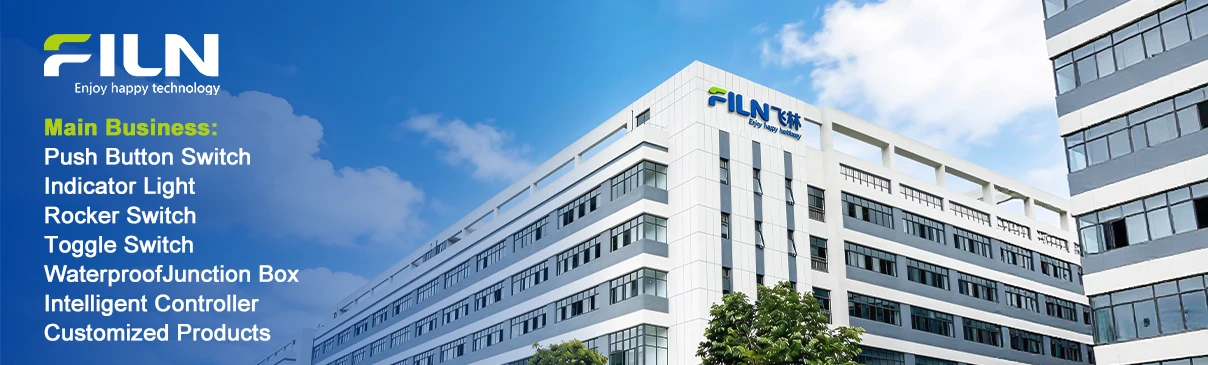
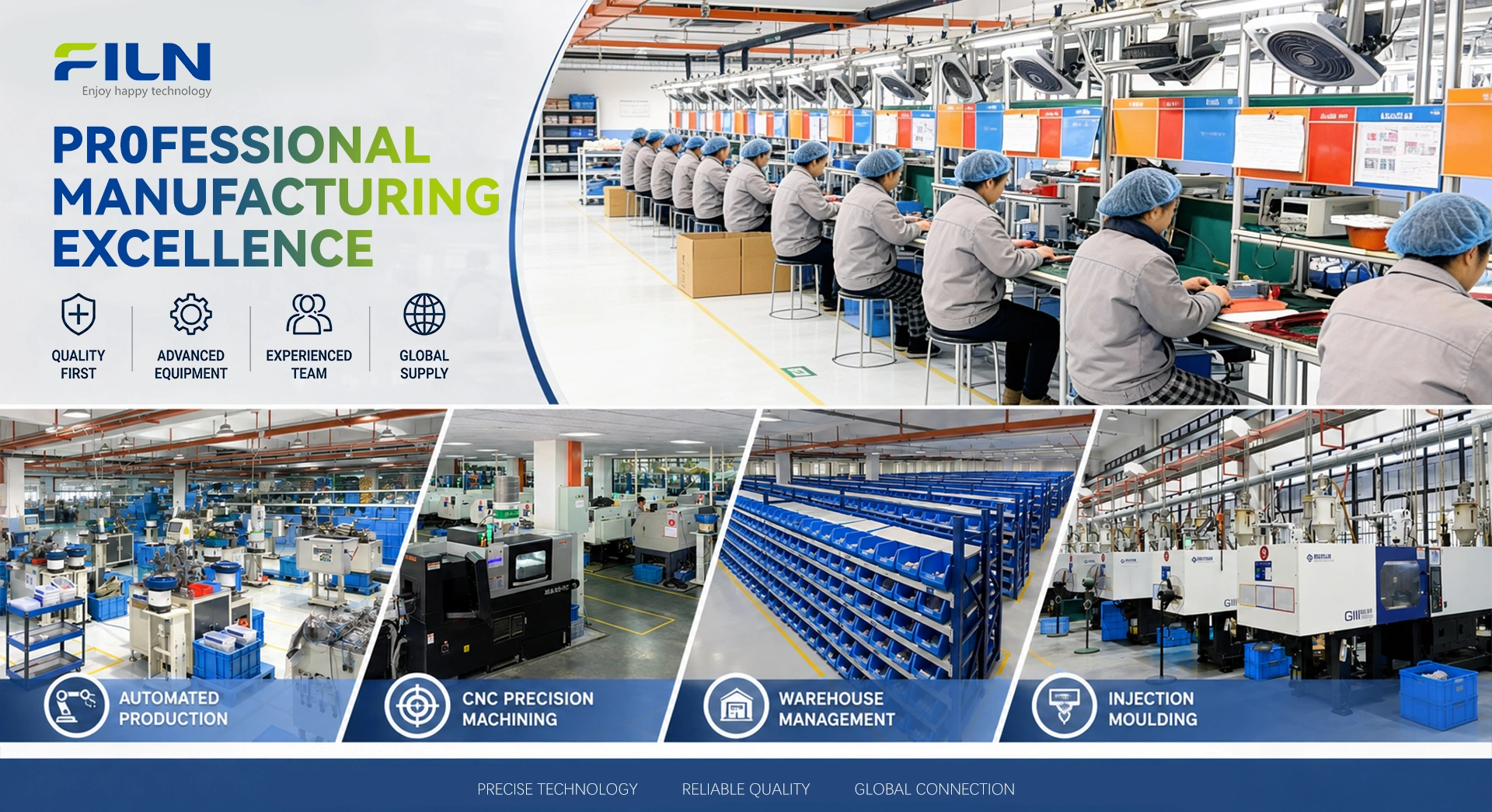
Yueqing Yulin Electronic Co., Ltd., under the premium brand name FILN, located in Wenzhou, Zhejiang, was established in 2006 as a professional electrical switch manufacturer integrating R&D, production, and sales. Its high-performance FILN brand products are sold in over 100 countries. FILN operates a modern 10,000 m² facility with 20+ advanced production lines and an independent testing lab. Driven by structured manufacturing processes and a verified ISO9001 quality system, FILN ensures continuous innovation and reliable electrical performance. Our certified products (CE, RoHS, REACH, TUV, CB) are widely specified in kitchen appliances, energy storage systems, EV charging, automotive, marine, and security networks.
Our core manufacturing focus specializes in the production of compact electrical switches and signal indicators, including metal pilot lights, toggle switches, rocker switches, pushbuttons, and custom micro-switch assemblies. FILN maintains a certified quality management system, with product lines carrying verified regulatory marks including ISO9001, CE, VDE, RoHS, SGS, IP65, and TUV. This comprehensive quality oversight ensures stable electrical characteristics and reliable mechanical life for every delivered component.
By working directly with our dedicated engineering teams, clients can overcome custom solution design challenges and adapt terminal wiring, body sizes, or resistor tolerances to fit specialized project parameters. For procurement inquiries or technical evaluation samples, reach our engineering office via our main web portal at www.filn.com or via direct email correspondence at inquiry@cnylin.com.cn.
TECHNICAL FREQUENTLY ASKED QUESTIONS
Q1: What is the exact mounting hole size required for the FL1M-14SJ-2 indicator light?
A1: This indicator light requires a precision 14.0 mm (0.551 inch) circular cutout hole in the panel chassis for proper installation.
Q2: Can this AC 220v led indicator light handle DC voltages safely?
A2: Yes, the FL1M-14SJ-2 can operate on both AC and DC current paths, with customized internal resistors optimized for specific voltage ranges like 5-24V or 110-220V.
Q3: What are the primary advantages of selecting a metal indicator over a plastic alternative?
A3: Metal indicators provide superior mechanical impact resistance and won’t crack or discolor under high thermal loads or UV exposure, making them ideal for heavy industrial use.
Q4: What finishes are available for the 14mm convex metal indicator light housing?
A4: FILN provides this indicator with a standard bright, silver chrome-plated copper alloy housing or a matte black zinc-aluminum alloy shell.
Q5: What is the ingress protection rating of the FILN FL1M-14SJ-2 light?
A5: The assembly is certified to IP65 and IP67 protection standards when installed with the included silicone sealing washer against a flat panel surface.
Q6: How do the 2pin metal terminals simplify system integration?
A6: The dual-pin design provides rigid termination points that easily accept direct wire soldering or standard quick-connect female crimp lugs, reducing assembly times.
Q7: What options are available if my application requires integrated wire leads instead of pin terminals?
A7: FILN offers direct custom production options, including factory-insulated, pre-wired leads cut to length to meet specific project guidelines.
Q8: Which LED illumination colors can be ordered for the 14mm metal indicator?
A8: The product line is available in five standard industrial signaling colors: Red, Green, Yellow, Blue, and White (RGYBW).
Q9: What is the typical operational lifespan of the internal LED light source?
A9: The high-brightness solid-state LED elements provide a rated operating life of 50,000 to 100,000 hours under nominal conditions.
Q10: What international electrical safety certifications does this product hold?
A10: The FILN indicator series is fully certified and compliant with CE, TUV, CB, RoHS, and REACH safety standards.
Q11: Can the indicator light withstand high-vibration applications like heavy machinery?
A11: Yes, the unit includes a stainless steel star lock washer that maintains constant rear tension to prevent loosening in high-vibration environments.
Q12: What is the maximum power consumption of the 220V AC indicator light?
A12: The indicator operates efficiently with a low power dissipation rating of approximately 0.2 Watts at full brightness.
Q13: Does FILN offer customized engineering solutions for specific terminal requirements?
A13: Yes, as a direct factory manufacturer, FILN provides complete OEM and ODM support to customize dimensions, terminations, and resistance values.
Q14: What are the safe operating temperature limits for this component?
A14: The indicator is rated for reliable continuous operation within an extended temperature window of -40°C to +80°C.
Q15: How does the convex head profile improve panel safety compared to flat designs?
A15: The elevated convex lens profile extends beyond the panel face, providing wider viewing angles so operators can see status updates from across the factory floor.
Q16: Does FILN enforce a minimum order quantity (MOQ) for custom voltages?
A16: No, FILN maintains a zero MOQ policy, supporting engineering prototypes, short-run equipment builds, and high-volume orders equally.
Q17: What material is used to construct the internal lamp holder matrix?
A17: The internal core is molded from premium Polyamide 66 (PA66 Nylon), which provides excellent flame-retardant properties and electrical insulation.
Q18: What is the dielectric insulation strength of the FL1M-14SJ-2 series?
A18: The component withstands test potentials from 1500V to 1800V AC between electrical pathways and the outer housing without flashover breakdown.
Q19: Can this indicator light be specified for outdoor marine dashboard applications?
A19: Yes, the chrome-plated copper shell and silicone sealing gaskets resist salt-spray corrosion and water intrusion, making it suitable for marine environments.
Q20: How can technical buyers contact FILN for direct volume procurement quotes?
A20: Technical procurement teams can visit our official website at www.filn.com or email our sales office directly at inquiry@cnylin.com.cn.