
Push Button Switches: A Deep Dive into Human-Machine Interaction and Selection Guide
1.1 Introduction: The Micro-Foundation of Human-Machine Interaction
Push button switches are one of the most fundamental and common components of the Human-Machine Interface (HMI). They are ubiquitous in modern technology, from the doorbells, calculator keys, and telephone buttons in our homes to the controls for heavy machinery on industrial control panels. They serve as a crucial bridge between physical commands and the electronic world. Even with the rise of touch screens and voice control, the importance of physical push button switches has not diminished. On the contrary, in many critical applications, they continue to dominate due to their unique tactile feedback and superior reliability.
Their enduring ubiquity stems from their irreplaceable role as the most primitive and intuitive form of human-machine interaction. Physical buttons, through a clear “push” action, provide immediate and tangible physical feedback, such as a mechanical “click” or a change in pressure. This definitive feedback mechanism is crucial in high-risk or blind operation scenarios. For example, in an industrial setting, an operator may be wearing gloves, or in an emergency, quick and accurate command execution is a top priority. In such situations, touchscreen gestures or voice commands may fail due to ambient noise, hand obstructions, or accidental touches. A physical mushroom-head button with a clear tactile feel ensures the command is executed accurately. This demonstrates that physical buttons are not an outdated technology but an optimal solution chosen after careful consideration for specific fields, with a design philosophy rooted in a deep understanding of human cognition and safety needs.
FILN, as a leading professional manufacturer and seller of push button switches, has a profound understanding of these technical details and market demands. We not only offer a wide range of standard metal and plastic push buttons available on the market, but also leverage our exceptional customization capabilities to meet diverse client needs, providing the most precise solutions for your projects.

1.2 Basic Working Principle and Structure
The basic working mechanism of a push button switch is relatively straightforward in both physical and electrical terms, but its internal structure ensures reliable electrical connection. The core principle is that when an operator applies pressure to the button or actuator, the internal spring and contacts are pushed down, causing the moving contact to touch the stable contact at the base of the switch. This process immediately changes the state of the circuit, either closing or opening it. When the pressure is removed, the spring retracts, returning the contacts to their initial state and changing the circuit connection.
Push button switches are typically made of plastic or metal, with various shapes and sizes that can be customized according to ergonomic or specific application requirements. Common shapes include flat, raised, and mushroom-head. Flat buttons are lightweight and simple, often used for tactile switches; raised buttons are easy to operate, especially for gloved hands in industrial environments; and mushroom-head buttons are a classic design for emergency stops due to their larger contact area and ease of pressing. The design of these physical forms is intended to optimize human-machine interaction and adapt to different operating environments and functional requirements.
1.3 Actuation Types: Momentary vs. Latching
Push button switches can be divided into two main categories based on their operation: momentary and latching. These two types have significant differences in function, application, and circuit design.
- Momentary Push Button Switches: This type of switch only forms an electrical connection when the user holds it down. Once released, the internal spring immediately returns the button to its initial position, breaking the connection. The characteristic of momentary switches makes them ideal for “event-triggered” applications, as they only function during a brief user interaction, ensuring quick device response and precise control. Common applications include doorbells, keyboard keys, calculator buttons, and walkie-talkies, where pressing the button sends a single signal and subsequent actions are handled by the device’s internal electronic logic.
- Latching Push Button Switches: In contrast to momentary switches, latching switches remain in their current state (“on” or “off”) after being pressed, and require another press to change state and return to their initial position. This mechanism allows them to maintain a state without continuous human intervention, making them suitable for applications that require “state persistence.” Examples include household light switches, traditional TV power switches, and security alarm systems, where the device needs to maintain its on or off state after a single operation until a new operation is activated.

The choice between momentary and latching is not arbitrary; it is determined by the “state-holding” logic required by the application, which directly affects circuit design, user experience, and system safety. For instance, the “brief connection” feature of a momentary switch makes it suitable for sending a “pulse” signal, while a latching switch is ideal for controlling a device that needs to run continuously, such as a machine’s power. In terms of installation complexity, latching switches typically require state management, making them more complex than simple momentary switches.
The table below provides a detailed comparison of the core features of momentary and latching push button switches:
| Feature Comparison | Momentary Push Button Switch | Latching Push Button Switch |
| Operating Behavior | Spring-loaded; automatically returns to initial position upon release. | Stays in its position after a press, until pressed again to change state. |
| Circuit Type | Normally Open or Normally Closed | Normally Open or Normally Closed |
| Typical Applications | Doorbells, keyboards, calculators, walkie-talkies, medical alarms. | Room light switches, power controls, security systems, traditional TV switches. |
| Installation Complexity | Relatively simple, usually only requires connecting two terminals. | Relatively complex, requires state management. |
1.4 Contact Configuration: Normally Open (NO) vs. Normally Closed (NC)
In addition to actuation type, another basic classification of push button switches is their default electrical state, namely Normally Open (NO) and Normally Closed (NC).
- Normally Open (NO) Contacts: In the default, un-pressed state, the contacts are open and the circuit is not conducting. The contacts only close, allowing current to pass, when the button is pressed. A doorbell is a classic example of this switch type; the circuit is only closed, and the doorbell rings, when the button is pressed.
- Normally Closed (NC) Contacts: In the default, un-pressed state, the contacts are closed, and current can continuously flow through the circuit. When the button is pressed, the contacts immediately open, interrupting the current flow. This type of switch is often used in safety applications like emergency stop buttons.
- Normally Open/Normally Closed (NO/NC) Dual Contacts: Some push button switches have both Normally Open and Normally Closed functions, integrating multiple sets of contacts on a single button. This allows a single button to meet more complex control logic needs, such as producing two different output states from a single input signal.
Normally Closed contacts play a crucial role in “fail-safe” designs for safety applications, where their response speed and reliability are superior to Normally Open contacts in high-demand scenarios. An NC switch keeps the circuit conducting in its “un-activated” state, allowing the system to continuously receive “all clear” feedback. If the circuit is broken for any reason (whether the button is pressed or a wire is accidentally cut), the signal is sent “at the beginning of the action” , triggering a stop or an alarm instantly. In contrast, an NO switch must successfully close the contacts “at the end of the action” to send a signal, which in a critical moment could lead to a delay or failure to send a signal due to contact failure. This “break to signal” design philosophy considers the worst-case scenario from the start, making it widely recommended for high-safety applications like emergency stops.
The table below compares the key features of Normally Open and Normally Closed contacts:
| Feature Comparison | Normally Open (NO) Contacts | Normally Closed (NC) Contacts |
| Default State | Open (non-conducting) | Closed (conducting) |
| Active State | Closes and conducts when pressed | Opens when pressed |
| Response Speed | Signal is sent “at the end” of the action | Signal is sent “at the beginning” of the action |
| Typical Applications | Doorbells, calculator keys, start buttons | Emergency stop buttons, safety alarm systems |
Part 2: In-depth Analysis of Technical Selection Parameters
2.1 Electrical Performance: Ratings and Load Considerations
When selecting a push button switch, it is a common mistake to think that only the rated voltage and current are sufficient. A professional selection process requires a deep understanding of the nature of the electrical load and its potential impact on the switch.
- Rated Voltage and Current: The voltage rating and current rating are the basic parameters for selecting a switch and must meet the equipment’s requirements. However, this is only the first step.
- AC vs. DC Differences: AC and DC circuits have fundamental differences in their requirements for switches. In a DC circuit, an arc is more likely to be generated and maintained between contacts when disconnected, requiring a faster break speed to prevent contact erosion. AC current, on the other hand, automatically extinguishes the arc at the zero-crossing point, making it easier to disconnect. This difference determines whether a specific switch is suitable for AC or DC connections.
- Load Type: The nature of the electrical load is a key factor affecting switch reliability.
- Resistive Loads: Such as heaters or incandescent lights, have relatively stable current and a smaller impact on the switch.
- Inductive Loads: Such as motors, relays, or transformers, can generate inrush currents up to 6 times the steady current at startup and high-voltage back EMF when disconnected, causing a strong arc between contacts. This arc can severely erode the contacts and shorten the switch’s lifespan.
- Capacitive Loads: Such as power supplies or filter circuits, also produce extremely high inrush currents at startup, placing a huge impact on the switch contacts.
The real selection challenge lies in understanding the “nature” of these loads and their “instantaneous impact” on the switch, which directly relates to the switch’s electrical life and reliability. Therefore, professional selection must be based on the load type, choosing a switch with the appropriate “break speed” and “endurance” to ensure long-term stable operation. This reveals the hidden risks and the importance of professional knowledge in the selection process.
2.2 Life Cycle Metrics: Mechanical vs. Electrical Life
The core metrics for measuring a push button switch’s durability are its mechanical and electrical life, which reflect different aspects of the product’s performance.
- Mechanical Life: This refers to the number of operations a switch can perform without an electrical load to ensure the integrity of its mechanical structure. Mechanical life mainly reflects the design and manufacturing quality of the switch’s internal mechanical components (e.g., springs, actuators, and housing) and is usually much higher than its electrical life. For example, some switches have a mechanical life of several million cycles.
- Electrical Life: This refers to the minimum number of cycles a switch can be opened and closed under its rated load conditions while remaining within its electrical specifications. Electrical life is a more important metric for measuring a switch’s reliability in practical applications, as it directly considers the damage to contacts from electrical phenomena such as arcing and inrush current. Because electrical loads, especially inductive or capacitive loads, cause far more wear on contacts than simple mechanical motion, electrical life is typically much lower than mechanical life. For example, a switch might have a mechanical life of millions of cycles, but its electrical life under a specific load might only be tens of thousands of cycles. This significant difference reminds users that in critical applications, electrical life must be the core consideration, and it warns against potentially one-sided claims from manufacturers.
2.3 Environmental Adaptability and Protection Ratings
The environmental adaptability of a push button switch is crucial to its reliability, which is usually measured by the IP (Ingress Protection) rating. The IP rating is an international standard that indicates an electrical device’s resistance to dust and water.
- IP Ratings: Consist of the letters IP followed by two digits.
- First Digit: Represents the dust protection level, from 0 to 6. The higher the number, the stronger the protection. For example, IP6X means it is completely dust-tight.
- Second Digit: Represents the water protection level, from 0 to 8. The higher the number, the stronger the protection. For example, IPX7 means it can be submerged in 1 meter of water without harm.
- Special Protection Ratings: IP69K is a special high-level rating designed for environments that can withstand high-temperature and high-pressure water jet cleaning. This is particularly important for industrial and medical equipment that requires frequent cleaning and disinfection. However, it’s important to note that IP69K is not suitable for applications involving long-term submersion in water.
Besides the IP rating, other environmental parameters are also crucial, such as temperature resistance (some miniature buttons can operate in extreme temperatures from -40°C to +125°C, suitable for automotive applications ), explosion-proofing, vandal resistance (common in public places like ATMs or security systems ), and oil resistance (JEM standards F and G ).
The table below provides a detailed explanation of IP protection ratings:
| IP Code | First Digit (Dust Protection) | Second Digit (Water Protection) |
| 0 | No protection | No protection |
| 1 | Protection against solid objects > 50mm in diameter | Protection against vertically dripping water |
| 2 | Protection against solid objects > 12.5mm in diameter | Protection against dripping water when tilted at 15° |
| 3 | Protection against solid objects > 2.5mm in diameter | Protection against spraying water |
| 4 | Protection against solid objects > 1.0mm in diameter | Protection against splashing water |
| 5 | Dust-protected; prevents harmful dust ingress but not entirely dust-tight | Protection against low-pressure jets of water |
| 6 | Completely dust-tight; prevents all dust ingress | Protection against powerful water jets |
| – | 7: Can be submerged in 1m of water for 30 minutes | |
| – | 8: Can be permanently submerged in water at a specified depth |
Part 3: Diverse Applications of Push Button Switches
3.1 Industrial and Heavy Machinery
In industrial automation and heavy machinery, push button switches are core components for human-machine interaction, control, and safety.
- Emergency Stop Buttons: This is the most critical type of button in industrial safety. Its design is not arbitrary; it follows strict international safety standards. A typical emergency stop button has the following features:
- Shape: Usually a conspicuous mushroom-head shape, making it easy for an operator to quickly and accurately press in an emergency.
- Color: Must be red, with a yellow background or housing to create a strong visual contrast and be easy to identify.
- Function: Typically a latching switch that, once pressed, locks into the “stop” position and requires manual rotation or a second press to unlock and reset.
This design embodies a perfect combination of ergonomics and safety engineering. The red color and mushroom shape make it easy to identify and operate both visually and by touch, even with gloves on. Its latching function ensures the equipment will not accidentally restart until the danger is cleared, thereby uniting two seemingly contradictory goals: “preventing accidental operation” and “ensuring immediate response.” This is a testament to the profound insight in industrial design.
- Other Industrial Applications: Industrial-grade buttons are often sold as a complete built-in unit, including the actuator, fixing ring, and contact block, making them easy to install on control panels. They can be used to control the power cycles of heavy machinery or to immediately stop operations in an emergency. For example, industrial buttons can be installed next to a machine for manual intervention during the production process.
3.2 Consumer Electronics and Smart Home
In the consumer electronics field, the development trend for push button switches is miniaturization, high integration, and high reliability.
- Miniaturization and PCB Integration: As device internal space becomes increasingly compact, subminiature and tactile push button switches have become mainstream. These compact switches are often mounted directly on a printed circuit board (PCB) to power keyboards, calculators, phones, and interface control panels. They require relatively low operating force and often provide a “click” sound for tactile feedback. To enhance reliability, these miniature switches often feature gold contacts and temperature-resistant designs.
- Smart Home Applications: In smart homes, push button switches can be used for power control and mode switching. They are deeply integrated with the device’s internal electronic logic, evolving from simple physical switches into physical interfaces for smart control.
Buttons in modern consumer electronics are no longer just simple switches. They are integrated with indicators, buzzers, and other components to form a complete HMI unit. For example, the indicator lights on a keyboard provide visual feedback to inform the user of the status of caps lock, num lock, etc.. This expands the button’s function from a simple “input” to “input + status feedback,” greatly optimizing the user experience.
3.3 Automotive and Medical Equipment
In the automotive and medical fields, which have extremely high requirements for reliability, durability, and safety, the selection of push button switches is based on a comprehensive consideration of extreme environments, personal safety, and functional precision.
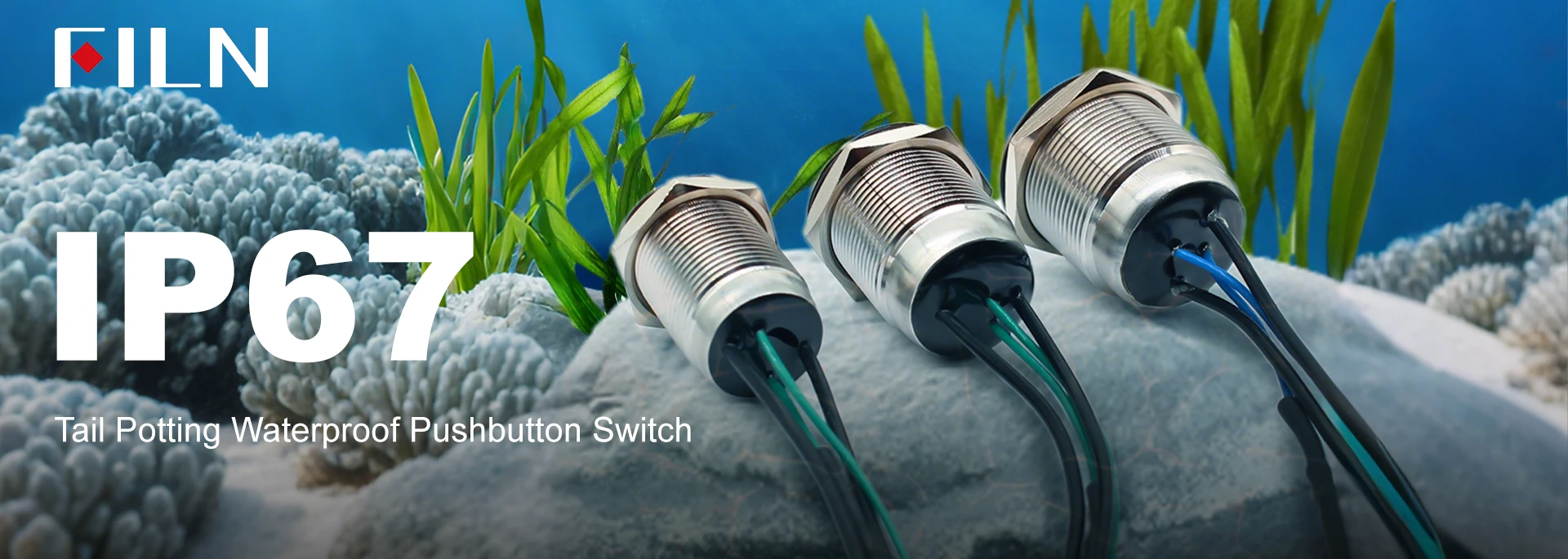
- Automotive Applications: Modern car dashboards integrate a variety of complex function buttons, such as the fuel tank release, ESP switch, and parking assist radar button. These buttons not only need to have an aesthetically pleasing HMI but also must work stably in extreme environments, such as a temperature range from -40°C to +125°C. Therefore, automotive push button switches must meet high protection ratings like IP67 for dust and water resistance.
- Medical Equipment Applications: Medical equipment has stringent requirements for push button switch reliability. For example, wired medical footswitches are often used in high-precision surgery, allowing surgeons to control equipment with their feet and free up their hands. These switches must provide intuitive and precise operation and have high protection ratings (such as IPX8) to withstand high-pressure water washing or disinfectant erosion, ensuring surgical precision and patient safety.
These application scenarios reveal that a push button switch’s “reliability” is not a single metric but a systemic engineering problem determined by its materials, structure, protection rating, and strict quality certifications.
Part 4: Light-Emitting Push Button Switches
4.1 Illuminated Buttons: A Leap from Function to User Experience
An illuminated push button switch, as the name suggests, integrates a light-emitting diode (LED) into the button. This design is more than just for illumination; it greatly optimizes the human-machine interaction experience by integrating “operation” and “status feedback” into a single physical unit, improving operational efficiency and safety.
In traditional HMIs, the control button and indicator light are often separate, requiring the operator to visually locate the light to confirm device status. The advent of illuminated buttons merges the two, creating a more compact and intuitive interaction model. For example, in audiovisual broadcasting equipment or smart homes, the button’s backlight can clearly indicate whether the device is on or off. More advanced designs can even use multi-colored LEDs or flashing modes to convey richer information, such as a device fault or the activation of a specific mode. This integrated design reduces the time operators spend searching for and matching buttons with indicators on the panel, and its value is particularly highlighted in dimly lit environments. This proves that technological evolution is based on a deep understanding of user needs and cognitive habits, aiming to improve human-machine communication in a more intuitive way.
4.2 HMI Design with Illumination
The color, shape, and illumination status of a button collectively form the “language” of HMI design. This language has developed standardized “vocabulary” in different industries to enable efficient and error-free human-machine communication.
The industrial control sector has established a universal code for button colors and their functional meanings. For example, red is typically designated for “stop” or “emergency” functions, while green indicates “start” or “run”. These standards are not arbitrary but leverage the human brain’s inherent recognition and emotional association with colors (especially red and green). This allows operators to react quickly and correctly by instinct in an emergency, significantly reducing the risk of accidental operation. This standardized design is key to ensuring industrial and public safety and is a sign of a mature industry.
The table below lists the correspondence between button colors and their functional meanings in industrial and general equipment:
| Color | General Meaning | Typical Application |
| Red | Stop, Emergency, Danger | Emergency stop button, emergency shutdown device |
| Green | Start, Run, Safe | Equipment start button, normal operation indicator light |
| Yellow | Warning, Anomaly, Fault | Anomaly status warning light, fault reset button |
| Blue | Mandatory, Reset, Specific Function | Mandatory operation button, system reset button |
| White/Gray | General Operation, No Specific Meaning | General switch, regular control button |
Part 5: Quality Certifications, Future Trends, and Selection Advice
5.1 International Quality and Safety Certifications
For any electronic component, especially a push button switch, its quality and reliability are of paramount importance. International certification is not just a “pass” to enter the market; it represents a systemic quality management and testing process that provides strong endorsement for product reliability and safety.
- UL and CE Certifications: UL (Underwriters Laboratories) and CE (Conformité Européenne) are two of the most prominent international certifications with widespread influence in the US and European markets, respectively. These certifications are third-party verifications of a product’s electrical safety and performance, ensuring that it meets stringent industry standards. For example, a UL-certified vandal-resistant switch must pass rigorous mechanical and electrical tests to ensure it can still function properly after being physically attacked.
- Military Standards: For applications in extreme environments, such as the military and aerospace, products must comply with even more demanding standards, such as MIL-STD-461. These standards impose extremely high requirements on product performance (e.g., impact resistance, electromagnetic interference resistance) to ensure absolute reliability in critical missions. This shows that in certain fields, product reliability must be considered from the very beginning with the most stringent standards.
5.2 Technological Evolution and Future Trends
The push button switch industry is at a critical juncture of technological evolution. Its future development is to “go beyond the physical switch itself,” becoming smarter, more integrated, and deeply fused with new material technology and the Internet of Things (IoT).
- Miniaturization and High-Density Integration: With the miniaturization of electronic components and the maturity of Surface-mount Technology (SMT) , push button switches can be integrated into more compact and complex devices.
- Multi-Functionality and Intelligence: Traditional mechanical buttons rely on physical contact to change a circuit’s state, and their lifespan is limited by mechanical wear and arc erosion. Solid-state switches based on the Hall effect or piezoelectric effect, however, sense operations in a non-contact manner , greatly increasing their lifespan and reliability. More importantly, in the context of the IoT, the role of a push button switch is shifting from a simple mechanical component to a data collection and transmission node. For example, a button on an industrial device can record the number of operations and duration, and upload this data to the cloud for analysis, thereby enabling predictive maintenance and optimizing production efficiency. This marks the transformation of the push button switch from a simple physical component into an intelligent one deeply integrated with “Industry 4.0” and the “Internet of Things.”
Conclusion and Selection Advice
Push button switches are fundamental components of human-machine interaction, and their importance cannot be overstated. The seemingly simple “press” action is a comprehensive manifestation of complex electrical, mechanical, and ergonomic principles. From the industrial emergency stop button designed for ultimate safety to the miniature switches in consumer electronics that enable high integration and intelligence, different application scenarios demand professional and customized solutions for push button switches.
When selecting the right push button switch, it is recommended to follow these key steps to ensure the final product’s reliability and safety:
- Determine Core Functional Needs: First, clarify whether the application requires a momentary switch for “brief operation” or a latching switch for “state holding.” Also, choose the appropriate contact configuration (Normally Open, Normally Closed, or dual-contact) based on the control logic.
- Evaluate the Electrical Load: Do not just consider the rated voltage and current. Analyze the nature of the load (resistive, inductive, or capacitive) and choose a switch that can withstand inrush currents and arcing upon disconnection.
- Consider the Working Environment: Based on the characteristics of the application environment (e.g., humid, dusty, high-temperature, outdoor), select a switch with the appropriate IP protection rating and temperature resistance.
- Pay Attention to Life Cycle Metrics: In critical applications, electrical life should be the core consideration, as it more accurately reflects the switch’s durability under actual working conditions.
- Consider HMI Requirements: Based on the operating environment and user experience needs, choose the appropriate button shape, color, and consider whether to integrate an LED illumination function to provide intuitive status feedback.
FILN has been dedicated to the push button switch field for many years. We not only provide a full range of high-quality and reliable standard products but also offer tailored solutions based on your specific application scenarios and unique requirements. We believe that every successful project stems from a relentless pursuit of detail. Whether you need a high-performance industrial switch or a beautiful and durable consumer electronics button, FILN can provide professional support.
If you are interested in any of the technical details discussed in this article or are facing challenges in selecting push button switches, we sincerely invite you to leave an inquiry on our official website. The FILN expert team will engage in a detailed discussion with you, providing the most professional advice and the highest quality products to create an excellent solution together.
Fill out my online form.