


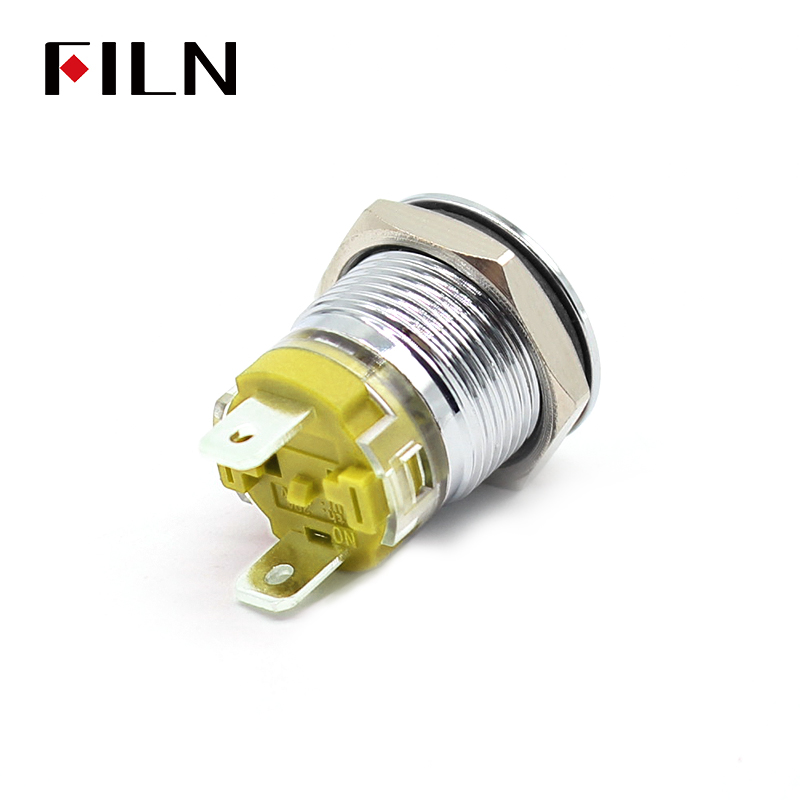


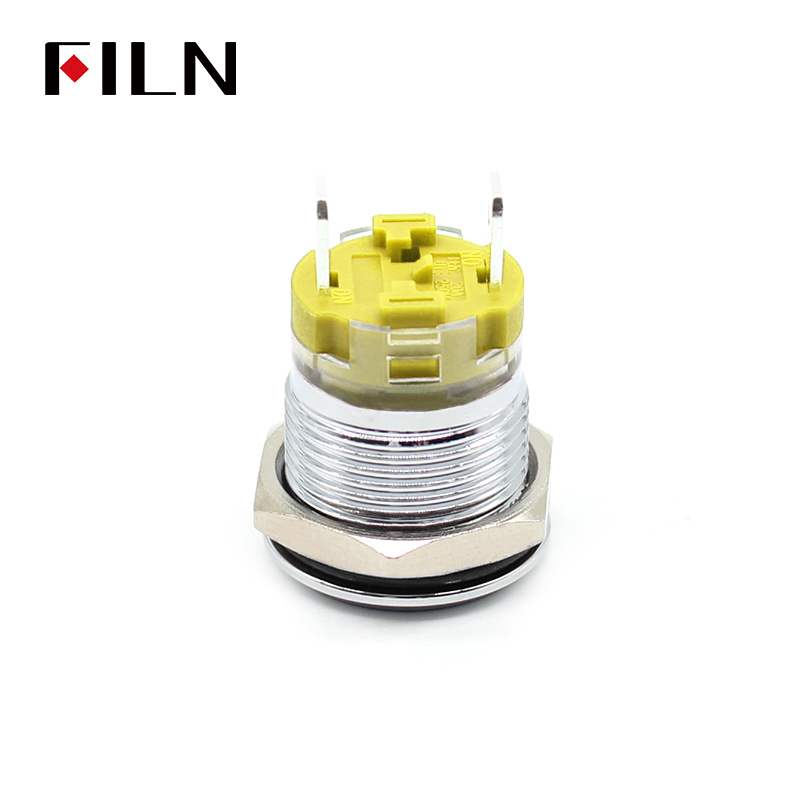


Product Drawings:


Comprehensive Guide to Flush Push Button Switch: Top Questions Answered
- Name:Flush Push Button Switch
- Model:GQB16
- Head Type:Flat Head
- Size:16mm
- Switching Functions:Momentary
- Contact Configuration:1NO
- Rated Voltage: 3mA~15A
- Voltage Options:12V-250V /DC
- Material:ABS plastic, Plastic
- Download Certification:CE, CCC, ROSH, UL
- Email:inquiry@cnylin.com.cn

Product Parameters:
| Product Name | GQB16 |
| Operation Type | Momentary |
| Light Voltage | DC 12V |
| Contact Type | 1NO |
| Material | Plastic |
| Mounting Hole Dia. | 16mm |
| Included Components | Micro Switch (optional, not included) |
How to wire a flush push button switch with led?
Generally speaking, a typical wiring process involves connecting the switch’s terminals to the power source and the load. To elaborate, the following steps are commonly taken:
- Disconnect Power: Always ensure to turn off and disconnect the power source before starting any wiring work to prevent accidents.
- Identify Terminals: Examine the switch for the marked terminals. Commonly, you’ll find COM (common), NO (normally open), and NC (normally closed) terminals.
- Prepare Wires: Strip the insulation off the wire tips that will be connected to the switch terminals.
- Connect to Power: Connect the live wire from the power source to the COM terminal.
- Connect to Load: The NO or NC terminal will be connected to the load, based on whether you need the switch to be ‘off’ or ‘on’ by default.
- Additional Connections: In some cases, you might have to wire additional components like LEDs or resistors. This depends on the type of flush push button switch you are using.
- Testing: After all the connections are made, re-connect the power supply and test the switch’s functionality to ensure proper wiring.
- Secure the Wiring: Use electrical tape or wire nuts to secure all the connections.
- Reassemble: Close the panel or housing where the switch is installed.
- Final Testing: Turn the power back on and test the switch again to confirm it’s working as expected.
For a step-by-step guide on how to wire a flush push button switch, you can refer to this article.
Customization Advantages of FILN flush push button switch
The FILN flush push button switch is a versatile product that can be customized according to the needs of different customers. This flexibility opens up an array of advantages for users, making it a sought-after component in various applications.
Why Customization is Important for flush push button switch ?
Customization is not just a luxury but a necessity in the ever-competitive market. Manufacturers are under constant pressure to provide products that meet specific customer needs. In the case of the FILN flush push button switch, customization has a significant impact in terms of functionality, aesthetics, and adaptability.
- Industry requirements differ: Different sectors have different requirements for push button switches. For example, the medical industry might require switches that are easily sterilizable, while the automotive industry may need switches that can withstand harsh conditions.
- Consumer Preferences: End-users may prefer specific symbols or lights that make the switches easier to use or identify, enhancing the user experience.
- Technological Advances: As technology progresses, the requirement for switches also changes. Customization ensures that the product remains relevant.

Customizable Button Symbols
One of the most prominent features that can be customized in a FILN flush push button switch is the button symbol. Customers can opt for various light symbols depending on their specific needs.
- User Experience: A customized symbol can dramatically improve user experience by providing easy identification of the button’s function.
- Branding: Companies can also opt for symbols that align with their brand identity, ensuring consistency in product design.
- Regulatory Compliance: In some industries, there are specific symbols that are required by law to ensure safety and compliance.
Customizable Voltage Options
Another crucial aspect of customization is the voltage of the push button switch. FILN offers various voltage options, such as 110v push button switches, to cater to the varied needs of customers.
- Geographic Requirements: Different countries have different standard voltages. Custom voltage options allow for the global distribution of products.
- Device Compatibility: Customizable voltage ensures that the switches can be easily integrated into different systems without requiring additional components.
- Energy Efficiency: The ability to customize voltage can help in creating energy-efficient systems.
FILN’s commitment to customization offers not just product variety but also competitive advantage. Whether it’s custom symbols, voltages, or connectors, the flush push button switch can be tailored to meet the unique demands of your project, making it a smart choice for a multitude of applications.
Related products:
Table of Contents
1.What is a Flush Push Button Switch and How Does It Differ from Other Types of Switches?
A flush push button switch is a type of switch with a button that sits flush against its housing. It is different from protruding types of switches in its streamlined design.It is used in industrial applications and also be found in consumer products like appliances and electronic devices. The switch typically has two positions, “on” and “off,” but can come in various configurations, including multiple buttons and indicators.
The first difference between a flush push button switch and other types of switches is in the design. Flush switches are designed to be flush with the panel, creating a sleek and unobtrusive appearance. This is in contrast to protruding switches that stick out from the surface.
Secondly, the flush push button switch generally has a shorter actuation distance compared to other types of switches. The shorter distance makes them quicker to operate, offering a tactical advantage in some applications.
Thirdly, flush switches are generally more resistant to accidental activation. The flush design minimizes the chances of accidentally hitting the button and triggering the switch.
There are multiple types of flush push button switches, including but not limited to, the surface mount momentary push button switch and the I/O Start Stop Flush Mounted Push Button Switch 600V 10A. For more detailed information on the types and functionality of these switches, you can visit this link.
Applications
Flush push button switches are versatile and find applications in various industries and products. Here are some of the most common areas where they are utilized:
- Industrial Machinery: One of the most common uses is in industrial equipment where quick and reliable switching is essential.
- Home Appliances: They are used in modern home appliances like washing machines and microwaves for easy and ergonomic use.
- Consumer Electronics: Devices like speakers, computers, and entertainment systems often use flush push button switches for sleek design and effective functionality.
Several specialized types of flush push button switches are available for different applications. For instance, the Jabsco Push Button Toilet Flush Switch – 37020-0000 is specifically designed for marine sanitation systems.
For those interested in waterproof options, there are flush push button switches with waterproof capabilities. You can learn more about these by visiting this link.
The working principle behind a flush push button switch is simple but effective. When the button is pressed, it activates an internal circuit that either opens or closes an electrical path. The flush design minimizes accidental actuations and allows for faster, more reliable operation.
The circuit inside a flush push button switch is often either a “normally open” or a “normally closed” circuit. When the button is pressed in a normally open circuit, it closes the electrical path, allowing current to flow. In a normally closed circuit, pressing the button opens the circuit, stopping the current.
There are also dual-action flush push button switches, which are capable of both opening and closing a circuit depending on how they are wired or programmed.
For a more in-depth look at the workings of a flush push button switch, check out this article.
What Are the Different Types ?
There are several types of flush push button switches, each with unique features suited for specific applications. Here are a few:
- Momentary Flush Push Button Switch: Only remains ‘on’ as long as it’s being pressed. Often used in control panels and alarm systems.
- Latching Flush Push Button Switch: Stays in the ‘on’ or ‘off’ state until it’s pressed again. Commonly used in lighting and power circuits.
- Illuminated Flush Push Button Switch: Comes with a built-in LED indicator to show the switch’s status.
- Double-headed Flush Push Button Switch: Features two buttons, usually for ‘on’ and ‘off’, allowing for more complex operations.
For those interested in surface-mount options, surface mount momentary push button switches are available and can be found here.
Choosing the right flush push button switch depends on various factors such as the application, required functionality, and environmental conditions. Here are some tips:
- Determine the Application: Identify the specific use-case for the switch. Is it for industrial machinery, home appliances, or some other application?
- Check Voltage and Current Ratings: Make sure the switch can handle the electrical load it will be controlling.
- Consider the Environment: For harsh or wet conditions, opt for a waterproof or ruggedized flush push button switch.
To check out some of the best waterproof flush push button switches, visit this link.
(it’s not over yet)
What Are the Materials Used ?
The materials used in manufacturing flush push button switches can vary depending on the application and desired properties. However, some commonly used materials include:
- Plastic: Lightweight and affordable, plastic switches are often used in consumer electronics and some light industrial applications.
- Metal: For more rugged and durable applications, metal switches are preferred. They are commonly used in industrial environments where durability is essential.
- Silicone Rubber: In some cases, the button itself may be made of silicone rubber to provide a tactile feel or to make the switch waterproof.
For those interested in metal flush push button switches, you can explore more by visiting this link.
How to Troubleshoot ?
Troubleshooting a faulty flush push button switch involves several steps to identify and fix the issue:
- Visual Inspection: Check for any visible damages or loose connections.
- Check Continuity: Use a multimeter to check the continuity between the switch terminals when the button is pressed and released.
- Inspect Wiring: Examine the wiring to ensure all connections are secure and appropriately insulated.
For a complete guide on how to troubleshoot flush push button switches, you can refer to this article.
Are Flush Push Button Switches Waterproof?
Flush push button switches can be waterproof depending on their design and the materials used. Waterproof switches are often made from durable materials like metal or specialized plastics and have rubber seals to prevent water ingress.
- IP Rating: Check the IP (Ingress Protection) rating of the switch. An IP67 or higher rating generally indicates that the switch is waterproof.
- Material: As mentioned, materials like metal and specialized plastics are often used to make waterproof switches.
- Application: Consider where the switch will be used. For outdoor or marine applications, a waterproof flush push button switch is often necessary.
For more information on waterproof flush push button switches, you can visit this link.
What are the Price Ranges for Different Types of Flush Push Button Switches?
The price of flush push button switches can vary widely depending on various factors:
- Material: Metal switches are generally more expensive than their plastic counterparts.
- Features: Additional features like illumination or double-headed designs can increase the price.
- Brand and Quality: Established brands often offer higher quality at a premium price.
For a variety of flush push button switches with different price ranges, you can check out this selection.
Are There Any Industry Standards ?
Yes, flush push button switches are often manufactured and tested according to international and national standards to ensure safety and performance. These standards cover aspects like mechanical operation, electrical capacity, and environmental resistance.
- IEC Standards: These are international standards applicable globally.
- UL Standards: Primarily used in the United States, these standards ensure the safety of electrical devices.
- CE Marking: In the European Union, CE marking is required to confirm compliance with safety, health, and environmental protection requirements.
For those interested in flush push button switches that conform to international standards, you can visit this link.
By now, you should have a comprehensive understanding of flush push button switches, from their types and applications to how to choose and troubleshoot them. Armed with this knowledge, you’re well-equipped to make informed decisions whether you’re installing a new switch or looking to replace an old one.
How to Install a Flush Push Button Switch?
Installing a flush push button switch is a straightforward process, but it’s crucial to take some safety measures. Here’s a simplified guide to help you install the switch:
- Power Off: Always start by turning off the main power supply to the circuit where you’ll be installing the switch.
- Read Instructions: Many flush push button switches come with an instruction manual. Read through it to familiarize yourself with the installation process.
- Prepare the Surface: Clean and prepare the surface where the switch will be installed. This often involves drilling a hole for the switch to fit into.
- Wire Preparation: Strip the wires that will be connected to the switch’s terminals.
- Connect the Wires: Using the wiring diagram provided, connect the wires to the appropriate terminals on the switch.
- Secure the Switch: Place the switch into the drilled hole and secure it with the provided hardware, usually a locking nut.
- Test: Before permanently attaching everything, turn the power back on temporarily to test if the switch works as intended.
- Secure Wiring: Once confirmed, secure all wiring with electrical tape or wire nuts.
- Close Up: If the switch is part of a panel or enclosure, replace the cover.
- Final Test: With everything secured and the power turned back on, perform a final test to ensure the flush push button switch is functioning correctly.
For a detailed guide on how to install different types of flush push button switches, you can refer to this article.
How to Maintain a Flush Push Button Switch?
Maintaining a flush push button switch is essential for its longevity and proper functioning. The maintenance routine can vary depending on the type of switch and its application, but here are some general tips:
- Regular Inspection: Periodically inspect the switch for any signs of wear, tear, or damage.
- Cleaning: Use a soft, dry cloth to clean the surface of the switch. Avoid using abrasive materials or strong solvents.
- Check Connections: Ensure that all connections are secure. Loose wires can result in malfunctions or short circuits.
For an extensive guide on how to maintain different types of flush push button switches, check out this article.
With this information at hand, you should have a well-rounded understanding of flush push button switches, from their varied applications to their inner workings and how to properly maintain them. Whether you’re an industry professional or a DIY enthusiast, this guide aims to provide you with the knowledge needed to make informed decisions in the realm of flush push button switches.
What are the Applications of Flush Push Button Switches?
Flush push button switches find use in a variety of settings due to their versatile design and functionality. Here’s a breakdown of some common applications:
- Industrial Controls: These switches are often used in machinery and equipment for controlling various functions.
- Consumer Electronics: Remote controls, gaming devices, and other handheld electronics often feature flush push button switches.
- Automotive: You’ll find these switches in car interiors, often used for functions like starting the engine or operating electric windows.
For those interested in the various applications of flush push button switches, you can learn more by visiting this link.
What is the Role of Voltage and Current Ratings in Flush Push Button Switches?
Understanding the voltage and current ratings is crucial when selecting a flush push button switch for any application. Here’s why they are important:
- Voltage Rating: This tells you the maximum voltage the switch can handle. Exceeding this rating can result in failure or even a fire.
- Current Rating: Similarly, the current rating indicates the maximum amount of current the switch can safely carry.
- Application Specific: The ratings should align with the requirements of the specific application for which you are using the switch.
For more information on the importance of voltage and current ratings in flush push button switches, you can refer to this article.
What are Surface Mount Momentary Push Button Switches?
Surface mount momentary push button switches are a specific type of flush push button switch designed to mount directly onto the surface of a board or panel. These switches are usually only active for as long as they are being pressed.
- Temporary Activation: Unlike other types of switches that remain in an ‘on’ or ‘off’ state, these switches are active only when pressed.
- Mounting Style: As the name suggests, they are mounted on the surface of a board, making installation often easier than other types.
- Common in Electronics: Due to their momentary nature, these are commonly used in applications like reset buttons in electronics.
For a comprehensive guide on surface mount momentary push button switches, you can refer to this link.
When compared to other types of switches, flush push button switches offer specific advantages and disadvantages based on design and application.
- Design Aesthetics: Flush switches are often sleeker and more streamlined, fitting seamlessly into modern design schemes.
- Ease of Use: The flush design often makes these switches easier to use, with a simple press action.
- Application Flexibility: Their versatile design allows them to be used in a wide range of applications, from industrial machinery to consumer electronics.
For a more detailed comparison between flush push button switches and other types of switches, you can check this article.
This guide aims to serve as a comprehensive resource for understanding the intricacies of flush push button switches. From their applications and material compositions to their installation and maintenance, the objective is to equip you with the knowledge you need to make well-informed decisions in this domain.
What Makes a Flush Push Button Switch Waterproof?
A waterproof flush push button switch is designed to resist the ingress of water and other liquids, making it ideal for outdoor or harsh environment applications. Here are the aspects that contribute to its waterproof nature:
- Sealing Mechanism: Special gaskets and seals are used to prevent water from entering the switch components.
- Material Composition: These switches are often made from materials that are impervious to water, such as specific types of plastic or metal.
- IP Ratings: The Ingress Protection (IP) rating specifies the level of protection the switch offers against water and other elements.
To understand how waterproofing works in flush push button switches, consider reading this comprehensive guide.
Choosing the right flush push button switch can be a daunting task given the plethora of options available. Here’s a breakdown of what you should consider:
- Application: Determine the primary function and location of the switch, as this will dictate other considerations like material and waterproofing.
- Voltage and Current Ratings: Ensure the switch you choose can handle the electrical specifications of your application.
- Mounting Style: Flush, surface mount, and other styles offer different aesthetic and functional benefits.
For a detailed guide on how to choose the right flush push button switch for your needs, you can refer to this article.
The I/O Start Stop Flush Mounted Push Button Switch with a 600V 10A rating is a specialized switch designed for high-power applications, often in industrial settings.
- High-Power Capabilities: This switch is capable of handling 600 volts and 10 amperes, making it suitable for high-power applications.
- Start/Stop Functions: It usually comes with two buttons, one for ‘start’ and another for ‘stop,’ offering more control in the application.
- Industrial Use: Given its high-power capabilities, this switch is often used in heavy machinery or industrial control systems.
To know more about the I/O Start Stop Flush Mounted Push Button Switch 600V 10A, you may visit this link.
A malfunctioning flush push button switch can result in operational disruptions. Here are some troubleshooting tips:
- Visual Inspection: Look for any signs of damage or wear that may be causing the malfunction.
- Electrical Testing: Use a multimeter to test the continuity of the switch to see if it is functioning as it should.
- Check Connections: Loose or corroded connections could be the culprit and should be tightened or replaced as necessary.
For more information on troubleshooting flush push button switches, you may refer to this comprehensive guide.
This guide aims to serve as a comprehensive resource on flush push button switches. From their basic functionality and types to intricate details like waterproofing and power ratings, the objective is to offer you all the information you need for any application or troubleshooting scenario.
Wrapping Up: The Comprehensive Guide to Flush Push Button Switches
We have covered an extensive range of topics related to flush push button switches in this guide. From understanding their basic functionality and types to diving into specific applications, voltage and current ratings, and troubleshooting tips, this article aims to be your go-to resource for any questions related to these versatile switches. Whether you are a seasoned professional in the field or someone simply curious about the utility of flush push button switches, this guide aims to equip you with the knowledge you need to make well-informed decisions in this domain.